- calendar_today August 22, 2025
Breaking and Beyond: How New Olympic Sports Are Igniting Passion Across America
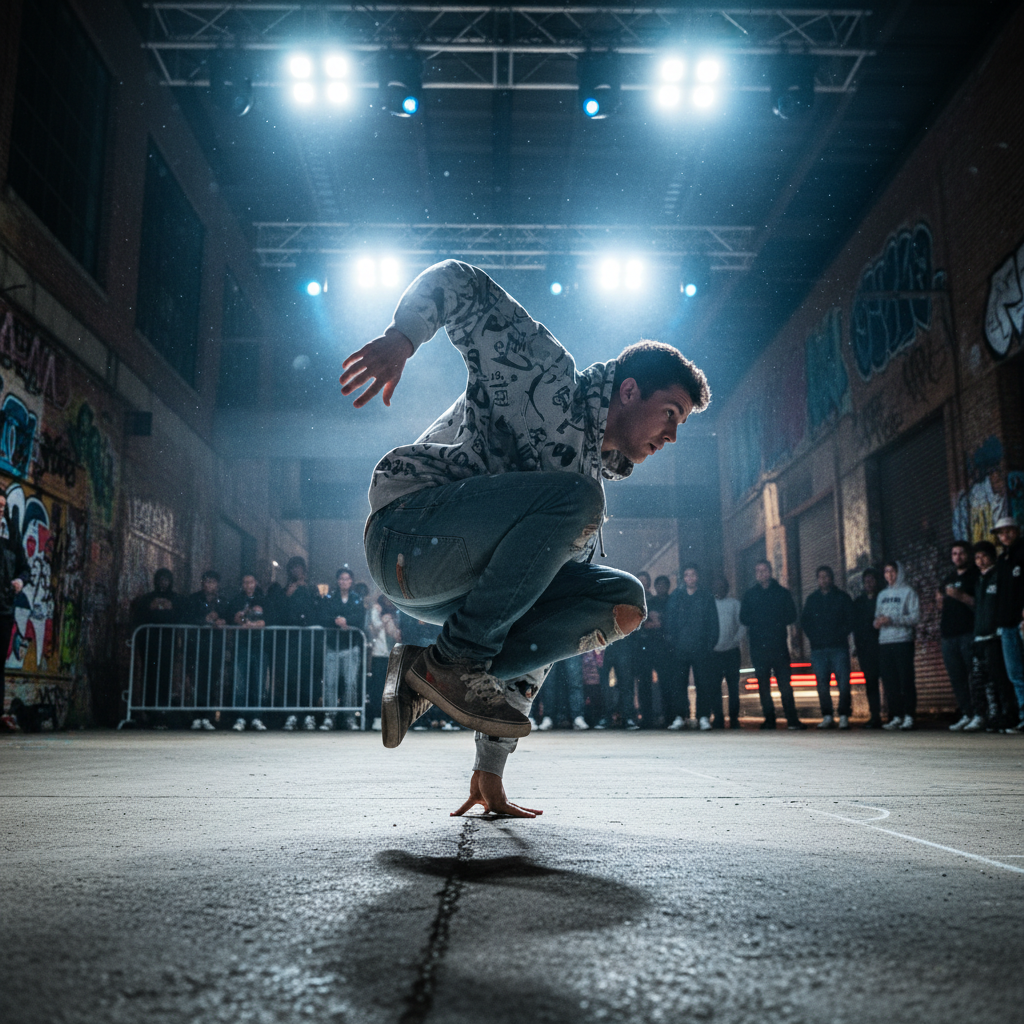
The concrete thrums with bassline beneath Marcus “Flash” Rodriguez’s palms as he readies his freeze pose under the harsh lights of South Bronx’s The Point CDC. Twenty years ago, his uncle battled on these same grounds when breaking was just street culture. Now, on this electric April evening in 2025, Rodriguez isn’t just dancing – he’s training for Olympic gold.
“This spot right here? This is sacred ground,” Rodriguez says, gesturing to the weathered practice space where legendary crews once shaped breaking history. “Now we’re taking that same energy from the streets straight to the Olympics. That’s wild, man. That’s beautiful.”
Around him, a new generation of breakers – they call themselves “Olympic outlaws” – spin and twist with scientific precision. Their movements blend raw street energy with athletic calculations that would impress any gymnastics coach. The revolution isn’t just happening in the Bronx though. From Venice Beach’s sun-soaked concrete to Chicago’s underground breaking dojos, America’s urban landscapes are transforming into Olympic training grounds.
Down in Miami’s Wynwood district, former NFL linebacker Marcus Thompson watches his daughter Sierra perfect her toprock at the newly opened Breaking Academy. “I used to think the Olympics was all about track and swimming,” Thompson admits, his voice carrying over the mix of hip-hop and coaching cues. “But watching Sierra battle, seeing the strength, strategy, and spirit required – this is pure athletics, no question.”
The numbers back up the cultural shift. Breaking academies have sprouted up in 127 cities since January 2025. Local parks departments report a 300% surge in requests for breaking-specific practice spaces. But it’s not just about the dance. Sport climbing gyms are packed shoulder-to-shoulder with urban professionals and teenage crushers alike, while skateparks have waiting lists that stretch into months.
“We’re witnessing the democratization of Olympic dreams,” explains Dr. Sarah Chen-Martinez, sports sociologist at UCLA. “These new sports speak the language of urban youth. They’re raw, accessible, and deeply connected to city culture. You don’t need a pool or a track – you need heart, creativity, and a patch of concrete.”
In Philadelphia’s Germantown neighborhood, legendary b-boy Kid Freeze has transformed an abandoned recreation center into the “Olympic Underground” – a 24/7 training facility where breaking meets science. “We got force plates measuring power output, high-speed cameras breaking down each move,” Kid Freeze explains, pointing to a wall of monitors. “But we never lose sight of the soul. That’s what makes breaking different. The technique serves the spirit.”
The impact ripples beyond individual athletes. Cities are scrambling to build world-class facilities, hoping to become breeding grounds for future Olympians. Chicago just approved a $50 million urban sports complex specifically designed for breaking, sport climbing, and skateboarding. Meanwhile, in Houston’s Third Ward, local businesses have formed a coalition to sponsor promising young breakers.
The transformation hasn’t come without tension. Some in the breaking community worry about losing authentic street culture to Olympic standardization. But at The Point CDC in the Bronx, Rodriguez sees it differently. As the evening session winds down, he watches younger breakers workshop moves, their faces lit with possibility.
“Look, breaking was always about taking nothing and making it into something beautiful,” he reflects, wiping sweat from his brow. “Now we’re taking our something beautiful and showing it to the whole world. That’s not selling out – that’s leveling up.”
As America barrels toward another Olympic cycle, the landscape of possibility has shifted. In community centers and converted warehouses across the nation, a new generation of athletes is redefining what Olympic dreams look like. They move to the rhythm of city streets while chasing gold-medal glory, proving that sometimes the most powerful sports revolutions start from the ground up.
“The Olympics are finally catching up to the streets,” Rodriguez grins, catching his breath after a final backspin. “And the streets? Man, we’ve been ready for this moment our whole lives.”