- calendar_today August 24, 2025
.
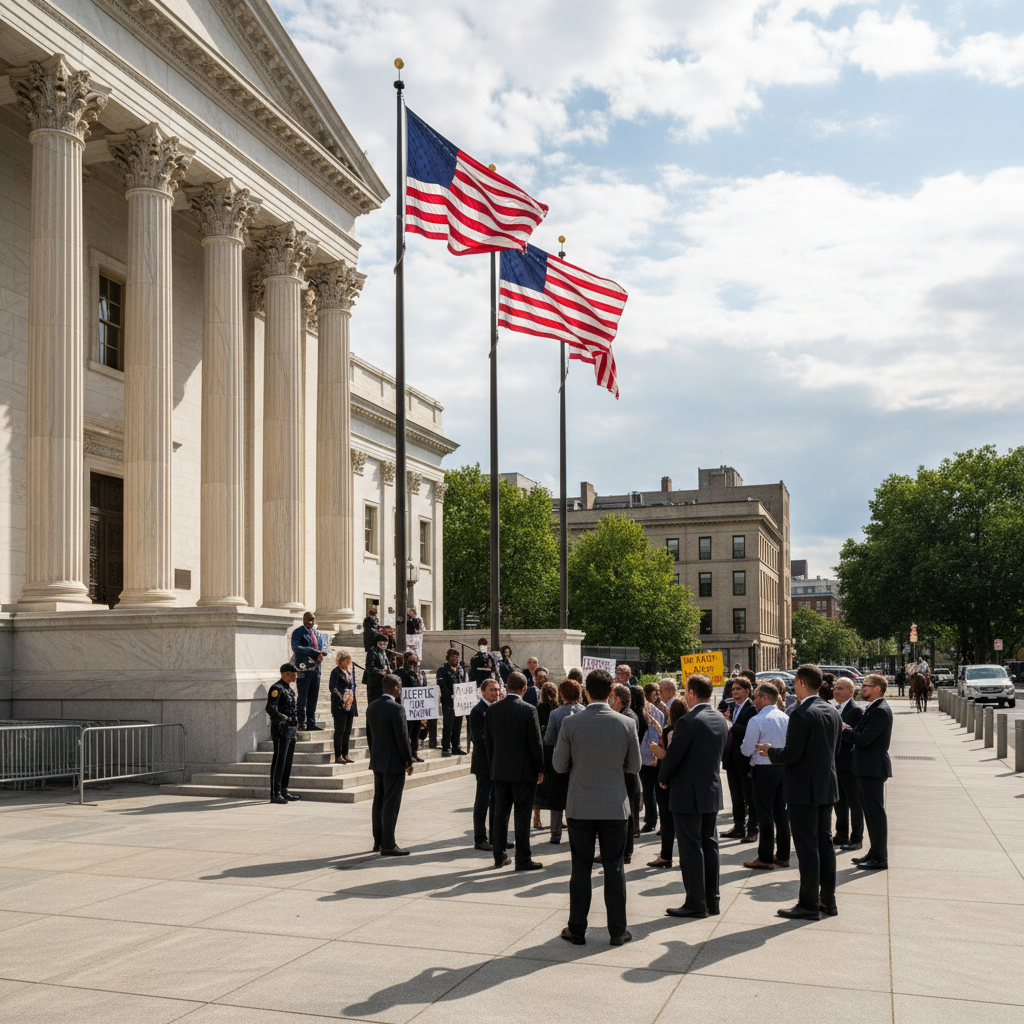
Attorneys for the Trump administration on Tuesday night asked the Supreme Court to reinstate a hold on billions in foreign aid spending that Congress had already set aside. The emergency petition, which moves the case back to the high court for the second time in six months, now asks the justices to prevent the U.S. Agency for International Development (USAID) from releasing up to $12 billion in funds appropriated for the agency by Congress.
The aid must be paid out before the fiscal year ends on Sept. 30. President Donald Trump, acting within hours of returning to the White House in January, had signed an executive order on his first day back in office calling on the federal government to freeze nearly all foreign aid payments. The president has since characterized the move as an effort to root out “waste, fraud, and abuse” in U.S. spending abroad.
The order was quickly met with resistance in court. In February, U.S. District Judge Amir Ali in Washington, D.C. ruled that the White House had to release the money to fund projects Congress already authorized. In a scathing order, Ali ordered the Trump administration to resume payments for grants that Congress had already appropriated, totaling billions of dollars in USAID money. The U.S. Court of Appeals for the D.C. Circuit has heard the case twice in the past two months, most recently earlier this month. At that time, the appeals court vacated the injunction Judge Ali had placed earlier in the year.
The case is, in many ways, largely a legalistic fight over the meaning of when the Trump administration should have to spend congressionally appropriated money on foreign aid. The current administration has continually fought against the release of congressionally authorized USAID funds, going to court in February after U.S. District Judge Ali ordered that aid be release. Judge Ali’s argument in part hinged on the doctrine of impoundment, a legal theory in federal court that, according to law, restricts the ability of the president to rescind or delay congressionally authorized spending.
Appeals court judge Karen L. Henderson, a George H.W. Bush appointee writing for the majority in the appeals court decision, said in her ruling that the plaintiffs — foreign aid groups looking to resume their grant payments — “fail to state a claim on which relief can be granted.” Henderson wrote that the group had no proper “cause of action” against the administration.
The White House was therefore granted an injunction on the funds. However, despite the apparent victory for Trump, the appeals court has yet to formally mandate its decision, leaving the case with Judge Ali’s earlier decision — and payment schedule — still technically in place.
Trump needs a fast decision, as the clock is ticking toward a Sept. 30 deadline for when the funds are set to run out. The Trump administration has now asked the Supreme Court to decide the question by blocking the funds once more. U.S. Solicitor General D. John Sauer, who filed the emergency request with the Supreme Court, wrote in the filing Tuesday that “unless this Court acts, the Government will be forced to ‘rapidly obligate’ some $12 billion in foreign-aid funds” by Sept. 30.
The question before the justices centers on whether courts should effectively prejudge the spending restrictions or leave it instead to the political branches to address. “Congress did not upset the delicate interbranch balance by allowing for unlimited, unconstrained private suits,” Sauer wrote in the filing. “Any lingering dispute about the proper disposition of funds that the President seeks to rescind shortly before they expire should be left to the political branches, not effectively prejudged by the district court.”
On the other side of the question are the plaintiffs in the case, which is a coalition of foreign aid groups that rely on USAID grants to function. The groups want the opposite: a strict reading of the president’s authority to unilaterally withhold congressionally approved funds. In addition to arguments from the Impoundment Control Act (ICA), a law passed in the 1970s to rein in executive authority over federal spending, the plaintiffs also bring the Administrative Procedure Act as one of their major statutory arguments.
In a similar case earlier this year, the Supreme Court issued a narrow 5-4 decision. Now, just days from a Sept. 30 deadline, and with billions of dollars on the line, the high court has once again been asked to intercede in the ongoing legal fight.