- calendar_today August 28, 2025
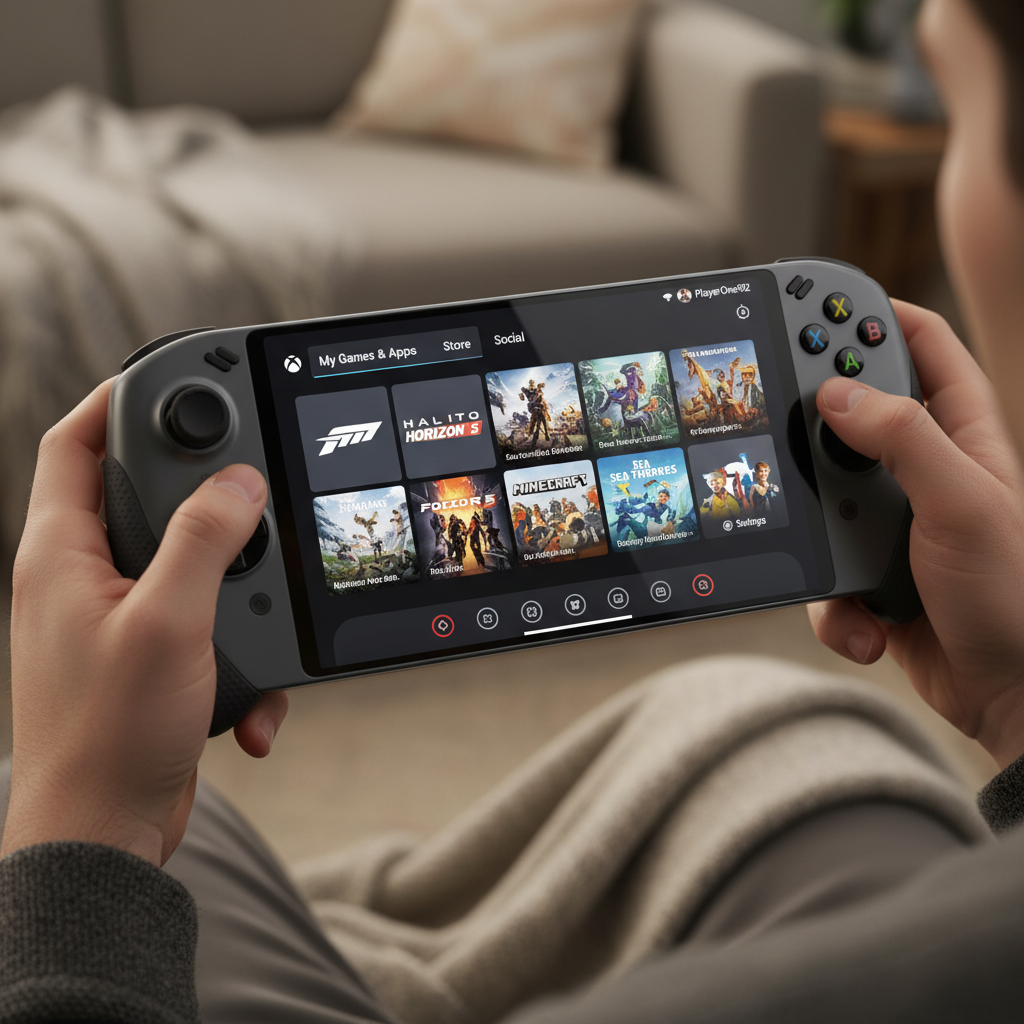
Microsoft demonstrates its commitment to handheld gaming with the launch of a new Xbox-branded user interface tailored specifically for handheld devices including the ROG Xbox Ally. It’s a significant step forward. Microsoft’s handheld gaming initiative marks a breakthrough for both the company and PC gaming fans who have dealt with Windows’ limitations on portable devices.
The Steam Deck and its Linux-based SteamOS from Valve have maintained dominance in the handheld gaming market until now. The Steam Deck demonstrates significant market interest for a non-Windows-based gaming device despite its main limitation of running Windows games only through Proton (Valve’s compatibility layer). Proton compatibility has steadily improved. Other storefronts or apps are available for installation. SteamOS can’t function as a direct plug-and-play alternative to Windows.
Microsoft and Asus have teamed up to develop solutions for these limitations. The partnership between Microsoft and Asus intends to fill the functional void by implementing a SteamOS-inspired experience while retaining Windows. The new ROG Xbox Ally handheld replaces the traditional Windows desktop-and-taskbar appearance with an interface that caters to gamepad use. The interface presents a full-screen tile-based display which mimics the user experience available on Xbox consoles and Nintendo Switch devices.
Microsoft announced to The Verge that the Xbox interface will initially launch on the ROG Xbox Ally. However, it won’t stop there. Microsoft announced that the Xbox interface will shortly be implemented on additional Ally handheld devices. Starting next year other Windows-based handheld devices will receive a “similar” new feature.
And this isn’t coming out of nowhere. Microsoft reportedly started developing this interface as early as 2022. At an internal hackathon that year employees developed a presentation which introduced a proposed “Windows Handheld Mode” to address Windows’ enduring handheld problems including poor touch functionality and inefficient resource usage. The new Xbox UI appears to incorporate several of those previously proposed features.
The new Xbox interface stands out from traditional Windows installations because it eliminates numerous background services and avoids heavy UI elements to achieve greater efficiency. The standard Windows interface is completely replaced by a new system on the ROG Xbox Ally. Microsoft maintains that the new configuration saves several gigabytes of RAM while cutting down power usage which is vital for enhancing performance in battery-operated portable devices.
That efficiency matters. The Windows default operating system installed on original ROG Ally devices results in performance limitations. While you operate Windows you also use Asus’ Armoury Crate software to handle controls and performance modes among other features. The new Xbox UI trims that fat.
But don’t worry: The new interface will not restrict users to its system. Microsoft confirms that users can still access the traditional desktop UI on the ROG Xbox Ally. You just need to deliberately launch it. Users benefit from the dual-mode feature that gives Xbox UI for gaming while maintaining classic Windows for other activities.
This move, however, isn’t just about convenience. It’s also a response to mounting pressure. Microsoft has responded at a measured pace to the Steam Deck’s increasing achievements produced by Valve. The Deck needed further refinements when it first came out. Its early builds were clunky. Compatibility was limited. The Steam Deck gained a dedicated fan base which propelled Linux gaming toward mainstream recognition. The SteamOS operating system is now used in the Steam Deck and its application is broadening to include Asus handheld devices and mini PCs.
Valve used the time Microsoft delayed to extend its growth and success. The Proton platform together with its foundational Wine project underwent substantial enhancements that now enable users to play numerous Windows games on Linux systems. SteamOS has moved beyond its status as a niche product. It’s maturing. It’s expanding. And most critically—it’s not Windows.
The launch of SteamOS alongside improved Proton compatibility has yet to trigger widespread consumer PC users to abandon Windows. It appears that a fundamental shift may be happening in the software ecosystem. Linux reached a market share of over 4% for the first time during the previous year. The current 4% market share for Linux doesn’t represent a majority but it is still a significant presence. Windows sustained its market position for decades thanks to its universal compatibility promise. Everything worked. Playing PC games typically required you to run the Windows operating system.
The development of Proton along with similar tools presents a potential obstacle to Windows’ long-standing dominance in PC gaming compatibility. Microsoft’s control over the gaming ecosystem starts to decline if developers and players can access both legacy and new content without relying on Windows. The growing difficulties with installing and operating modern Windows versions make SteamOS’s simpler and more targeted platform stand out as a better option.
Through its new handheld Xbox venture Microsoft aims to re-enter and seize its previous territory in the marketplace it largely neglected. The future will reveal whether the opportunity has passed. There is no doubt that the landscape of gaming has transformed.
And Microsoft finally knows it.