- calendar_today September 1, 2025
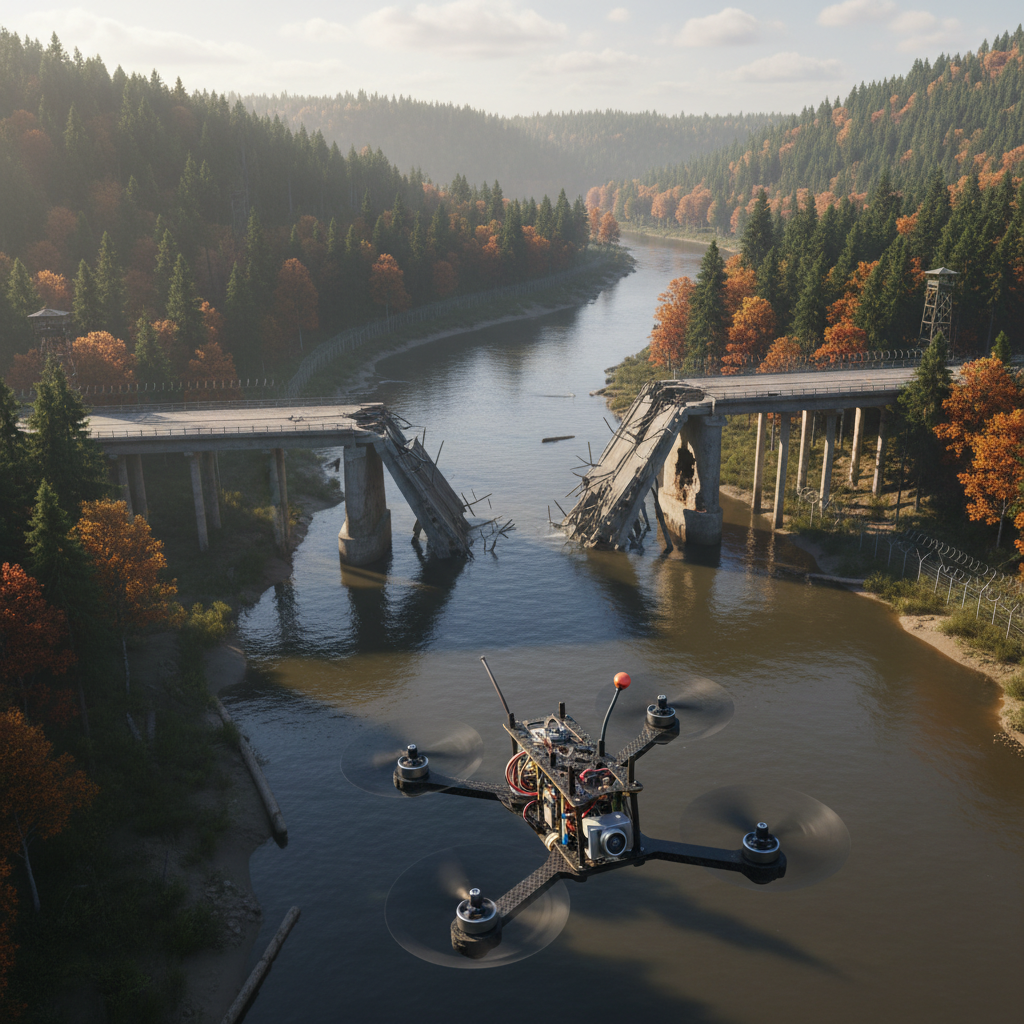
Ukraine’s military has reportedly destroyed two bridges within Russia’s Belgorod region in a brazen attack that shows the increasing battlefield impact of cheap, first-person-view (FPV) drones. The 58th Separate Motorized Infantry Brigade used the drones to target caches of mines and ammunition stashed under the bridges near the Russian border with Ukraine’s Kharkiv region.
Used by Russia for Resupply
The brigade said the two bridges were being used by Russian forces to resupply their troops near the frontline. According to Ukrainian authorities, the Russian military had mined the structures and was preparing them to be blown up in the event of a Ukrainian attack.
The Russians have been doing the same thing. In February 2022, in the early days of Russia’s full-scale invasion, Ukraine blew up several bridges on the road to Kyiv to hinder Moscow’s advance and protect the capital city. Now, it seems, Ukraine has turned that tactic against Russia.
The 58th Brigade became suspicious after it noticed activity around the first of the bridges. “It became clear that something was going on there,” a brigade representative told CNN. Unable to use standard reconnaissance drones, which would lose signal under the bridge, the unit sent out an FPV drone with fiber optics to look around.
It found a large cache of anti-tank mines and other ammunition. “We saw the mines, and we struck,” the brigade representative said.
Cheap and Effective
In a video released by the brigade, the drone can be seen approaching the bridge, spotting the hidden cache, and then detonating itself in a massive explosion. A second camera, mounted at a distance, shows the blast from afar. CNN has geolocated the bridge to Russia’s Belgorod region just across the border from Kharkiv.
Buoyed by its success, the unit inspected another bridge in the area. It, too, was mined. The unit launched a second drone, which set off another massive explosion. “(We) saw an opportunity and took it,” the brigade said in a statement.
Remarkably, the drones used in the operation cost between 25,000 and 30,000 Ukrainian hryvnias ($600 to $725) each. To put that in perspective, destroying the bridges from a distance using guided missiles or precision bombs would have cost millions of dollars. For instance, Ukraine has previously used U.S.-supplied HIMARS systems to target infrastructure in Russia’s Kursk region. Each HIMARS rocket costs tens of thousands of dollars, while the launchers themselves go for many millions. Instead, the Belgorod attacks were carried out with drones that cost less than a smartphone.
FPV Drones Are Changing the Battlefield
The attack in Belgorod is a potent demonstration of how inexpensive drones are already changing the modern battlefield. Ukraine was able to reach deeply into Russian territory and hit its targets using drones without having to expend its scarce, Western-supplied munitions.
In fact, Kyiv has used FPV drones before to good effect. In June, Ukrainian forces destroyed or damaged dozens of Russian aircraft using small drones smuggled close to military airfields.
“This is one of those moments when a relatively modest technology is used in a very unconventional way and shows a disproportionate effect,” military analyst Mykola Bielieskov said of the Belgorod strikes, noting that the drones give Ukraine a cost-effective means to offset Russia’s larger arsenal.
Victory Amidst a Difficult Time
The destruction of the bridges in Belgorod comes at a difficult time for Ukraine. In recent weeks, Russian forces have advanced steadily in the east, and Moscow continues to fire missiles and drones at Ukrainian cities almost daily. Putin has also said he has no interest in a ceasefire, telling Ukrainians that the offensive would continue.
In this context, the news of the destroyed bridges came as something of a morale booster for Kyiv. Russia has yet to comment on the strikes, but the damage to the bridges will no doubt complicate logistics in the Belgorod region and disrupt the supply lines to Russian troops near the Ukrainian border.
Innovation is the Key to Survival
For Ukraine’s military, the Belgorod strike is a reminder of a wider truth about the war. Innovation has become key to its survival. With limited supplies from the West and the Russians fielding larger forces, Kyiv has had to improvise. FPV drones, often made with off-the-shelf components and then modified by volunteers, have become one of its most effective weapons.
“The value of these drones cannot be overstated,” said the brigade representative. “We can achieve results that we could not without them with other weapons we don’t have.”
In a war that is already going on two years, Ukraine’s ability to improvise and find creative ways to strike inside Russian territory may be the difference. For now, two bridges in Belgorod show that even small and inexpensive weapons can have a strategic impact.