- calendar_today June 24, 2026
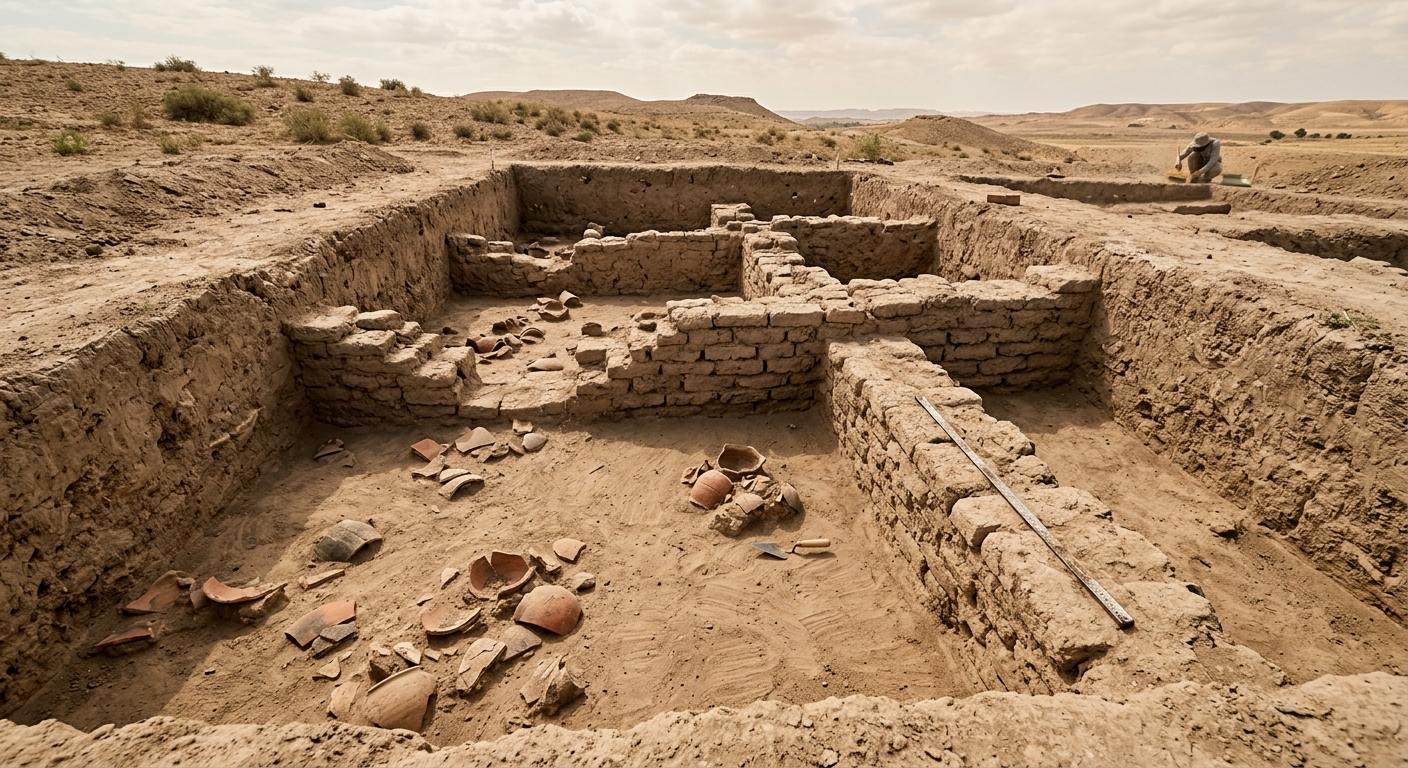
National 1 (USA) — A major stride in Egyptian archaeology has been made with the recent unearthing of a Greco-Roman cemetery at the Tell Kom Aziza site, located in Egypt’s fertile Nile Delta. The site, rich in egyptian artifacts and burial structures, dates back over 2,300 years and is lending new perspectives on the period’s evolving burial practices and the region’s enduring legacy.
Diverse Burial Customs Discovered at Tell Kom Aziza
Excavations at Tell Kom Aziza have revealed an extensive cemetery spanning from approximately 332 B.C. to 395 A.D., an era that encompasses both Ptolemaic and Roman rule in ancient Egypt. The site’s variety of burial forms—including simple earth pits, mudbrick-lined graves, and painted plaster coffins—demonstrates the transformation of the area from a once-thriving settlement to a significant necropolis.
Evolution of Funerary Traditions Over Centuries
Analysis of grave orientation, body positioning, and grave goods points to shifting funerary traditions over six centuries. Differences in the placement and orientation of the deceased, as well as in hand positions, appear to reflect changing social customs and possibly ritual or religious beliefs unique to the Nile Delta community. These findings enable archaeologists to better understand how burial rites were adapted through conquest and cultural change.
Significant Archaeological Discoveries: Animal Remains and Pottery
Among the most notable archaeological discoveries at Tell Kom Aziza is the complete skeletal remains of two wild boars. Their inclusion within the cemetery context may have ritual implications, possibly linked to the worship of ancient Egyptian deity Seth—a connection that offers fresh insight into local religious practices. Pottery fragments have also surfaced, ranging in date from the Old Kingdom through to the late Greco-Roman period. This scattered ceramic evidence indicates continuous use of the site for both domestic and funerary purposes, underscoring a history of human occupation in the nile delta spanning several millennia.
Insights into Ancient Burials and Rituals
The blend of burial types and grave goods demonstrates the complexity of funerary culture in ancient times. Differences found across graves, from painted coffins to simple pit burials, suggest varying status or beliefs held by those interred. Experts believe these distinctions provide crucial data about the social structure and daily life in the region. Such discoveries help refine the broader understanding of ancient burials and their significance within Egyptian culture.
Egyptian Antiquities and Global Scholarship
The ongoing work at Tell Kom Aziza is drawing attention from the international archaeological community, including several partners and analysts from National 1 (USA) institutions. By examining these newly uncovered egyptian antiquities, researchers hope to answer lingering questions about transition periods, including the Greek to Roman influence in funerary customs and community organization. The project underscores the continued value of cross-border collaboration in expanding knowledge of egyptian archaeology.
Future Excavations to Expand Historical Understanding
Ongoing excavations are expected to yield additional egyptian artifacts and data, further clarifying patterns of human settlement, religious life, and daily activities at Tell Kom Aziza. The discoveries so far not only enhance scholarly comprehension of burial practices and funerary traditions, but also underscore the archaeological significance of the nile delta to both regional populations and the broader narrative of ancient Egypt.