
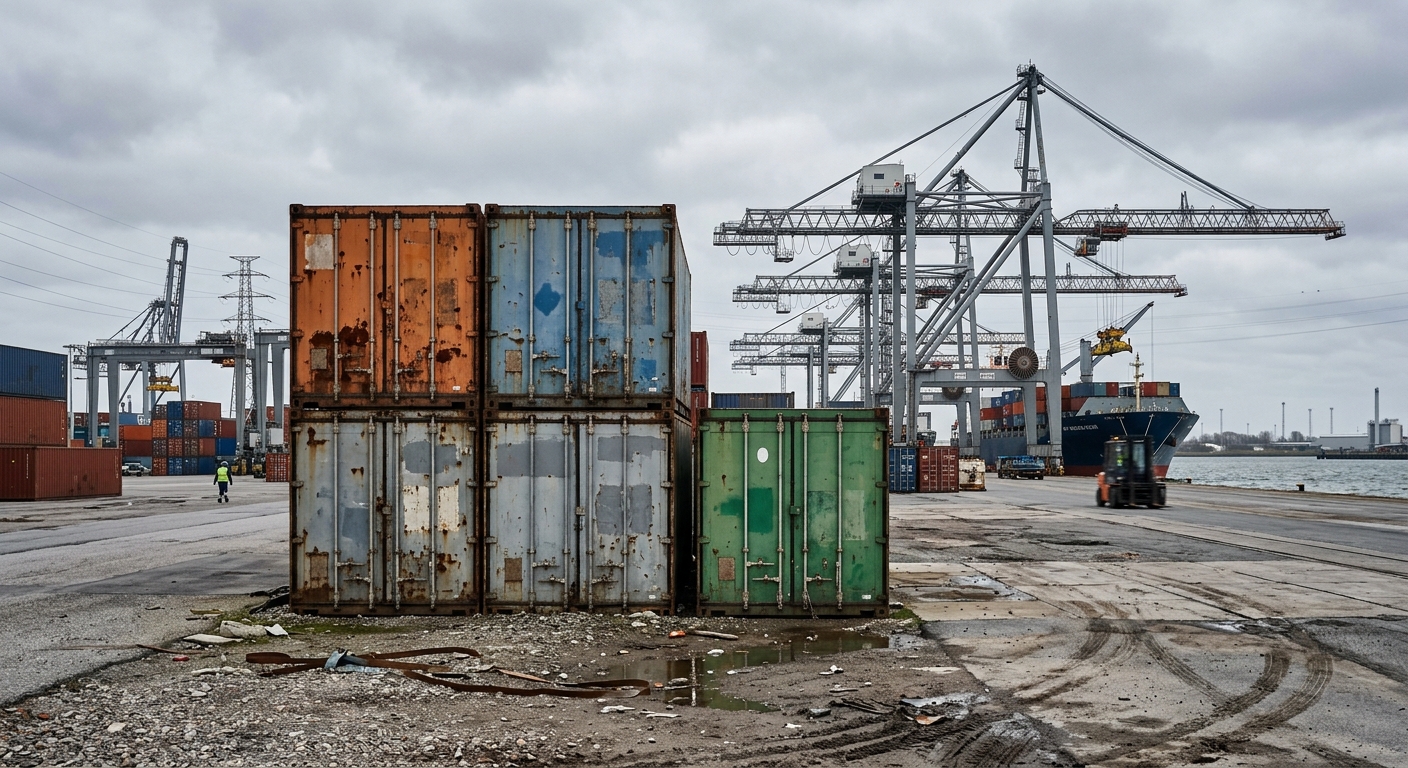
AI-generated illustration; not a photograph of the reported event.
- calendar_today July 24, 2026
The ongoing debate over U.S. trade policy intensified this week as a coalition of small businesses, represented by the Liberty Justice Center, filed a significant lawsuit against the Trump administration’s latest tariffs. In a development closely watched by stakeholders across National 1 (USA), the legal challenge targets Trump tariffs imposed on imports from 60 U.S. trade partners, questioning their legality and impact on both domestic enterprise and international trade relations.
Details of the Legal Challenge
The small business lawsuit, filed in the influential Court of International Trade in New York, contests the use of Section 301 of the Trade Act of 1974 as a justification for the new round of tariffs. These tariffs, set between 10% and 12.5%, were levied after the U.S. Trade Representative (USTR) accused numerous countries of failing to prevent the import of goods produced with forced labor. However, the plaintiffs argue that the US Trade Representative acted arbitrarily by imposing nearly uniform tariffs without providing country-specific findings or satisfactory explanations for the enforcement decisions.
Liberty Justice Center Leads the Case
The Liberty Justice Center—well-known for having previously won a landmark Supreme Court ruling against emergency tariffs—champions the latest case. According to legal documents, the Center contends that Section 301 does not authorize sweeping tariff enforcement at fixed rates on such a broad group of trade partners. Their hope is to halt the continuation of the enforced duties and to secure refunds for what they claim are unlawfully collected tariffs.
Trade Partners Respond to Forced Labor Allegations
Major trade partners targeted by these tariffs, including the European Union, China, Canada, and Japan, have strongly rejected the forced labor allegations that underpin the U.S. actions. Each country argues that current policies already address such concerns and that the rationale provided by the USTR is insufficient for justifying the tariffs. These rebukes underline the international sensitivities around trade enforcement and demonstrate the complexity of balancing human rights with global commerce.
Framework Under Section 301 of the Trade Act
Under Section 301 of the Trade Act, federal authorities are empowered to investigate unfair trade practices and enforce appropriate remedies. However, critics—including the Liberty Justice Center and the coalition behind the small business lawsuit—assert that this authority does not extend to blanket tariff enforcement across diverse economies without specific evidence or individual findings. The lawsuit directly challenges the scope and manner in which the section is being used in the current tariffs case.
Role of International Trade Institutions
The case, now pending before the trade court in New York, holds implications for the broader landscape of international trade and U.S. trade policy oversight. Observers within National 1 (USA) are monitoring how the court’s decision could set new precedents relating to tariff authority, forced labor concerns, and the procedures involving the US Trade Representative. Business advocacy groups and legal analysts alike have highlighted the potential consequences for both small and large importers affected by shifting tariff regimes.
Wider Impacts for Businesses and Communities
The outcome of the lawsuit is expected to have considerable ramifications for small businesses and supply chains throughout National 1 (USA). Local companies dependent on global sourcing have expressed concern over increased costs linked to tariff enforcement and the uncertainty surrounding ongoing trade disputes. Should the court rule in favor of the plaintiffs, it could prompt substantial changes in how trade policy is developed, ensuring more rigorous evaluation of both human rights claims and the economic impact on regional industries.


