
- calendar_today October 9, 2026
Michigan Senate Candidates Engage in Contentious Debate
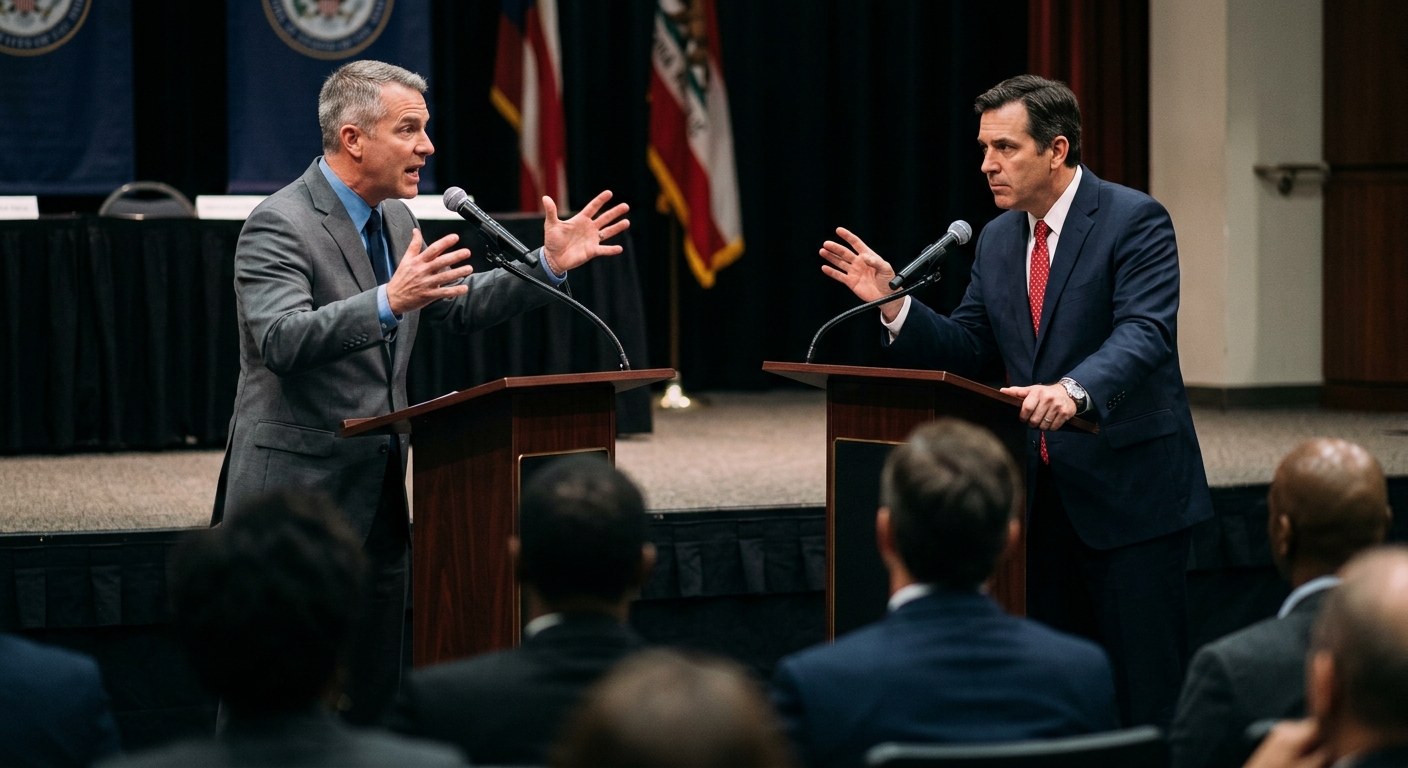
The Michigan Senate debate on Thursday showcased intense exchanges between Democratic candidate Abdul El-Sayed and Republican candidate Mike Rogers. The debate, lasting an hour, highlighted significant policy disagreements and saw both contenders leveled sharp personal jabs at each other throughout the evening.
Personal Insults Overshadow Policy Arguments
Abdul El-Sayed criticized Mike Rogers, calling him "weak," "cowardly," and a "sockpuppet for the Trump administration." Rogers, in turn, labeled El-Sayed a "glitchy AI chatbot" who is running a "con" and "will say anything to win." The moderator, Rick Albin, noted that the confrontational atmosphere persisted even during commercial breaks.
Debate Focus: Iran War, Trade War with Canada, and Domestic Issues
The forum covered several policy issues, such as the ongoing Iran war, the trade war with Canada, immigration policy, healthcare policy, and cost-of-living concerns. Both candidates agreed on pausing the gas tax due to high energy prices but clashed on the appropriate responses to international and domestic challenges.
Mike Rogers argued that "this would be the time to wrap it up" regarding the Iran war, expressing a desire for a resolution. He also pushed to end the trade dispute with Canada, referencing talks with Commerce Secretary Howard Lutnick about finalizing a deal. El-Sayed, meanwhile, criticized Rogers for not using his connections to President Trump to end the war, calling it a "stupid war." He questioned Rogers's willingness to challenge the Trump administration's trade and Iran policies.
Immigration and Healthcare Policy in the Spotlight
On immigration policy, Rogers stated that the Trump administration's aggressive operations in Minnesota earlier in the year were "probably not appropriate" but noted adjustments had since been made. He emphasized targeting criminals who reside in the U.S. illegally. El-Sayed, who supports abolishing Immigration and Customs Enforcement, affirmed that undocumented immigrants who commit violent crimes should be deported, but cautioned against violating constitutional rights in the process.
Healthcare was another point of contention. Rogers criticized El-Sayed's support for Medicare For All, describing it as "dangerous" and suggesting it would eliminate private insurance options. El-Sayed countered that families should have the option to keep their private health insurance if they wish, to which Rogers expressed skepticism.
Disputes on U.S.–Israel Relations and Foreign Policy
Foreign policy and U.S.–Israel relations were prominent in the debate. El-Sayed, an outspoken critic of Israeli actions during the Gaza conflict, opposes continued U.S. military aid for Israel. When asked whether he sees Iran or Israel as a bigger threat, El-Sayed called it a "ridiculous hypothetical," pointing out both have "proven dangerous in their own way." Rogers said he firmly supports Israel, noting that only the use of nuclear weapons would cause him to reconsider.
Rogers also criticized El-Sayed for not releasing a statement commemorating the third anniversary of Hamas' deadly October 7, 2023 attack on Israel, accusing him of ignoring the victims. El-Sayed responded that he condemned the attack but refused to "turn it into political theater." He later told reporters he expected any comments on the incident would be politicized.
Debate on Campaign Finances and Personal Property
The candidates also questioned each other's campaign finances and property holdings. El-Sayed brought up Rogers's ownership of a Florida waterfront home, while Rogers challenged El-Sayed over his wife's rental property in the United Arab Emirates. Rogers quipped, "At least Florida is in the United States," to which El-Sayed replied, "It's not in Michigan, my guy."
A Closely Watched Senate Race
This Senate race is considered one of the most competitive in the country. El-Sayed earned the Democratic nomination after a contentious primary involving disputes with moderates over single-payer healthcare and U.S. military assistance to Israel. Rogers, a former congressman, secured the Republican nomination following an endorsement from former President Trump, whose approval ratings have posed challenges for GOP candidates in this cycle.
Source: cbsnews.com.


