
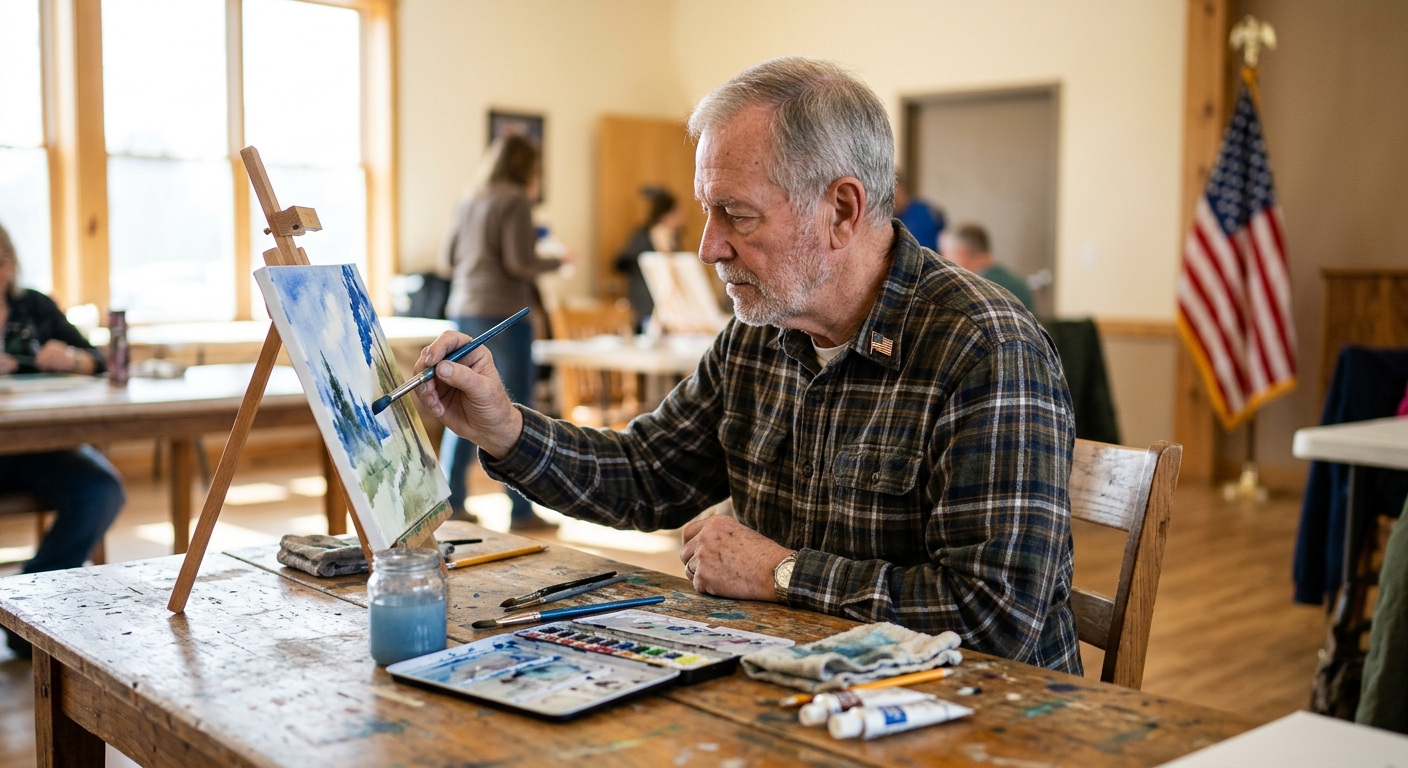
AI-generated illustration; not a photograph of the reported event.
- calendar_today November 11, 2026
Advocates Focus on Traumatic Brain Injury for Veterans Day
On Veterans Day, attention is turning to the significant impact of traumatic brain injuries (TBIs) on the post-9/11 military generation. Advocacy groups and organizations are emphasizing the lifelong impact of these "invisible wounds" and the importance of supporting veterans on the path to recovery.
Ongoing Prevalence Among Service Members
Traumatic brain injuries continue to affect veterans and active-duty service members. In the ongoing conflict with Iran, dozens of service personnel have suffered TBIs. Over the past twenty-five years, hundreds of thousands of U.S. veterans have been diagnosed with brain injuries sustained during the global war on terrorism. As many who work with veterans explain, recovering from these injuries can be a lifelong journey.
A Veteran's Story: Jon Kohl's Recovery Journey
Army veteran Jon Kohl is one of many veterans living with the effects of a severe brain injury. In 2013, at almost 25 years old, Kohl survived a helicopter crash in Afghanistan that left him gravely wounded with a TBI. His parents, Micha and Paul Kohl, quickly traveled to Landstuhl, Germany, to support their son at a military hospital. To relieve pressure on his injured brain, doctors had to remove as much as a third of his skull. Initially, Jon faced grim predictions about his prognosis, including the possibility that he would never walk or talk again. It took him a year just to be able to swallow.
Despite these challenges, Jon's perseverance and access to therapy have been central to his progress. Thirteen years later, he continues to make strides in his recovery. Regular art and music therapy have become key components of his rehabilitation. Notably, his brain injury left him unable to recall conversations or things he's read, but he still remembers all the music he knew before the accident. According to his father, this has become an important part of his ongoing therapy.
Support from the Wounded Warrior Project
Jon’s therapy is provided through the Wounded Warrior Project's Independence Program. This initiative supports eligible veterans with moderate to severe brain injuries, spinal cord injuries, or neurological conditions by offering specialized therapies at no cost. Kelly Parker, director of the program, highlighted that since 9/11, more than 530,000 service members and veterans have been diagnosed with some form of traumatic brain injury. Parker emphasizes that TBIs are "invisible wounds" and that their symptoms are often difficult to recognize early on.
The Importance of Recognizing and Treating TBI Symptoms
Parker lists common symptoms of TBI, which include persistent headaches, memory and concentration challenges, anxiety, depression, disturbances in sleep, and changes in mood or behavior. Experts stress that early intervention in diagnosis and brain injury treatment is crucial for better outcomes. However, it is also acknowledged that symptoms of a TBI can sometimes develop weeks, months, or even years after the initial injury occurs.
Paul Kohl, Jon's father, advocates for proactive treatment and support, stating it is important for families and communities to recognize that "there might be an injury you can’t see," urging that invisible wounds deserve the same help and support as visible ones.
Encouragement and Recovery for Veterans
Jon Kohl's story is a testament to recovery after a catastrophic brain injury. With ongoing therapy, family support, and his own perseverance, Jon continues to make progress. He offers encouragement to other veterans facing similar challenges: "Just straight up don’t give up; it’s all possible." Advocacy from veterans groups and support from organizations like the Wounded Warrior Project remain critical in raising brain injury awareness and improving veteran health.
Source: cbsnews.com.


