
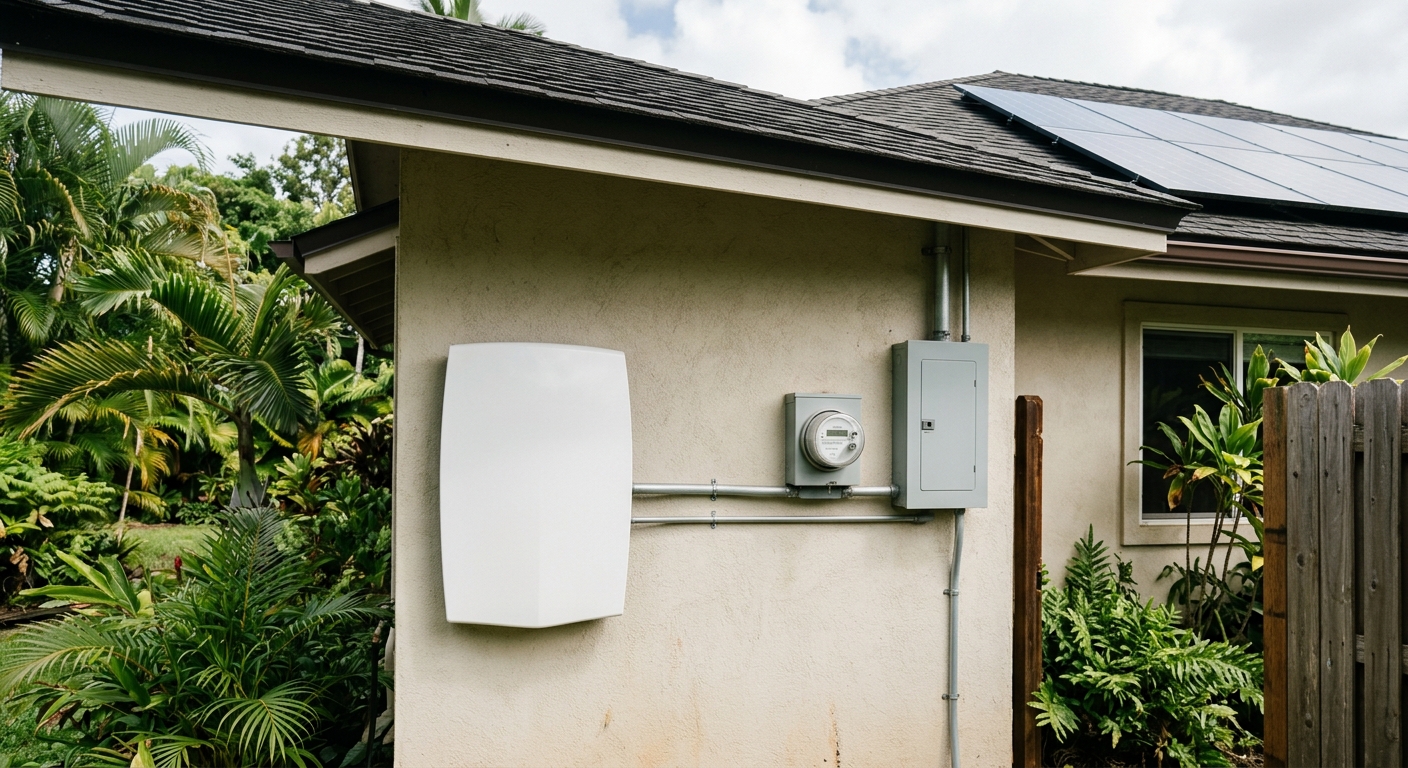
AI-generated illustration; not a photograph of the reported event.
- calendar_today November 17, 2026
Puerto Rico’s Power Challenges Persist
Frequent power outages continue to disrupt everyday life and economic growth in Puerto Rico. Despite nearly a decade of electricity problems and lingering impacts from Hurricane Maria, many residents face unpredictable blackouts and some of the highest electricity rates in the United States. New large-scale power sources remain scarce, and much of the federal funding earmarked for grid recovery has yet to reach the island.
Introduction of a Virtual Power Plant
In response, Puerto Rico has embraced a “virtual power plant” (VPP)—the first of its kind in Latin America and the Caribbean, and the nation’s second largest by capacity. This program connects batteries from nearly 115,000 households to the main grid, allowing the transmission and distribution utility, Luma Energy, to tap into stored energy when traditional power plants fall short. The VPP has been credited with preventing or lessening power outages over 60 times since June 2023.
The Role of Residential Solar and Battery Storage
The rapid adoption of rooftop solar installations on the island accelerated after Hurricane Maria in 2017. Today, over 207,000 of Puerto Rico’s 3.2 million residents have rooftop solar systems, most with battery storage to maintain power during outages. Participants like Hector Ríos, 75, from Cabo Rojo, share a portion of their battery power with the grid, earning compensation in return. Ríos found the system beneficial both for his household and the wider community, noting that it cut his summer electricity costs in half.
How the Virtual Power Plant Works
The VPP allows solar customers to offer about 30% of their battery capacity for grid support, usually during predicted energy shortfalls. Customers can opt out of sharing events or limit the amount they contribute, balancing personal needs with grid resilience. On average, a sharing event supplies energy equivalent to 80,000 residential users and lasts about four hours.
Challenges and Compensation Concerns
While the program has seen success, challenges remain. Some participants are confused about the compensation structure, which varies by solar provider, and worry about losing backup energy during emergencies. The payment system, sometimes redeemed as gift cards, is considered vague by some customers. Increased reliance on battery sharing has also been cited as a factor in recent electricity rate hikes, as Luma pays solar providers a premium for the stored energy, later recovering these costs from users.
Looking Ahead: Toward Sustainable Energy Solutions
Experts suggest that Puerto Rico’s VPP could play an even larger role in the future if batteries are deployed daily as critical grid assets, not just in emergencies. Jigar Shah, director of the Department of Energy’s Loan Programs Office under former President Biden, notes that this approach could displace more fossil fuel usage and help balance excess solar production. However, a shift to daily use would require a redesign of the program’s compensation structure to ensure sustainability.
For Puerto Rico to achieve its legal objective of 100% renewable energy by 2050, new investments in transmission infrastructure, large-scale generation, storage, and the full deployment of promised federal recovery funds will be necessary. Although the VPP is not a singular solution to the island’s energy crisis, it demonstrates the promise of distributed energy networks for resilience and community support.
Source: abcnews.com.


