
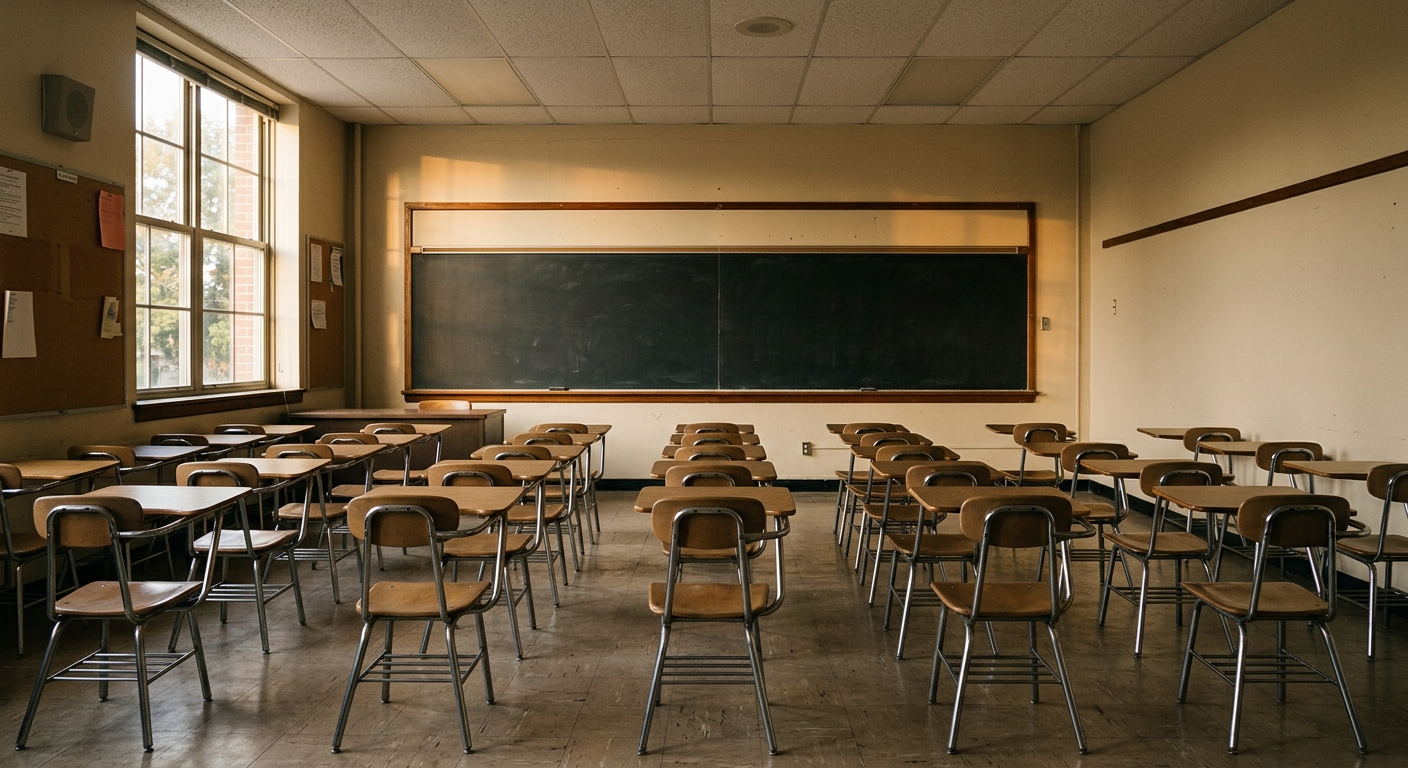
AI-generated illustration; not a photograph of the reported event.
- calendar_today November 18, 2026
School Districts Face Shrinking Enrollment
School districts across the United States are grappling with a significant drop in student enrollment since the onset of the pandemic. According to a recent study by Stanford University researchers Thomas Dee and Jaymes Pyne, public school enrollment has declined by more than 1.4 million students since 2019. The primary causes include declining birth rates and an increase in school choice options for families.
Challenges in Making Budget Cuts
Despite fewer students, school districts have largely refrained from closing schools or making substantial cuts. The scenario is highlighted by Seattle Public Schools, where officials have repeatedly proposed closing campuses with low enrollment, only to reverse course after facing strong community opposition. As a result, the district continues to face financial challenges, with further plans for school closures under consideration despite ongoing resistance.
Inaction Leads to Financial Strain
The hesitancy to make deep cuts is not unique to Seattle. Study data reveals that one in four public schools nationally has experienced a 15% or greater loss in student population since 2019. Nonetheless, the overall number of schools has remained steady, and teacher staffing has actually increased by 1% nationwide. Liza Rankin, a Seattle school board member, noted that employee pay and benefits constitute roughly 80% of district budgets. "Closing schools doesn’t save much money to begin with. Payroll is where the big money is," she remarked.
Pandemic Relief and Short-Term Solutions
Many districts were able to forestall hard decisions using more than $190 billion in federal pandemic relief aid, allowing them to maintain staffing levels despite shrinking student bodies. Now that these funds have been exhausted, districts face structural deficits while also contending with rising disability diagnoses and ongoing challenges in students' academic recovery following the pandemic. Rather than downsizing, many have relied on one-time reserves or small administrative cuts to fill budget gaps.
Case Studies: Seattle and San Francisco
Seattle is not alone in its predicament. In San Francisco, a similar drop in enrollment—about 10% since 2019—created a deficit exceeding $100 million. A 2024 proposal to close more than a dozen schools was abandoned after the superintendent resigned. The district has since reached a $183 million contract with the United Educators of San Francisco (UESF) and plans to close its structural deficit for the coming school year through early retirements and central office cuts, not closures. However, its most recent budget still projects a $26 million deficit by the following year, underscoring the fragility of such solutions.
Debate Over Rainy Day Funds and State Takeovers
Labor leaders in San Francisco point to the district’s substantial cash reserves—$139 million last year, projected to drop to $52 million over two years—as evidence that drastic measures can be deferred. Still, school finance experts like Jason Willis of WestEd warn against using rainy day funds to address ongoing expenses, noting that this approach does not resolve structural fiscal issues.
If local leaders fail to act, the threat of state intervention looms. At least 21 state takeovers of school districts have occurred since 2023. Under state oversight, local boards and superintendents often lose much of their authority over budgets and staffing decisions—a scenario experts view as highly disruptive.
The Academic and Community Impact
Research indicates that school closures tend to provide only modest and temporary budget relief and may set students back academically. Teacher layoffs, another potential response to deficits, can also disrupt student learning outcomes. Education leaders and researchers suggest shifting the conversation to how best to use remaining resources to serve students, emphasizing that ongoing inaction could ultimately prove more disruptive and costly.
Related coverage
Source: abcnews.com.


