
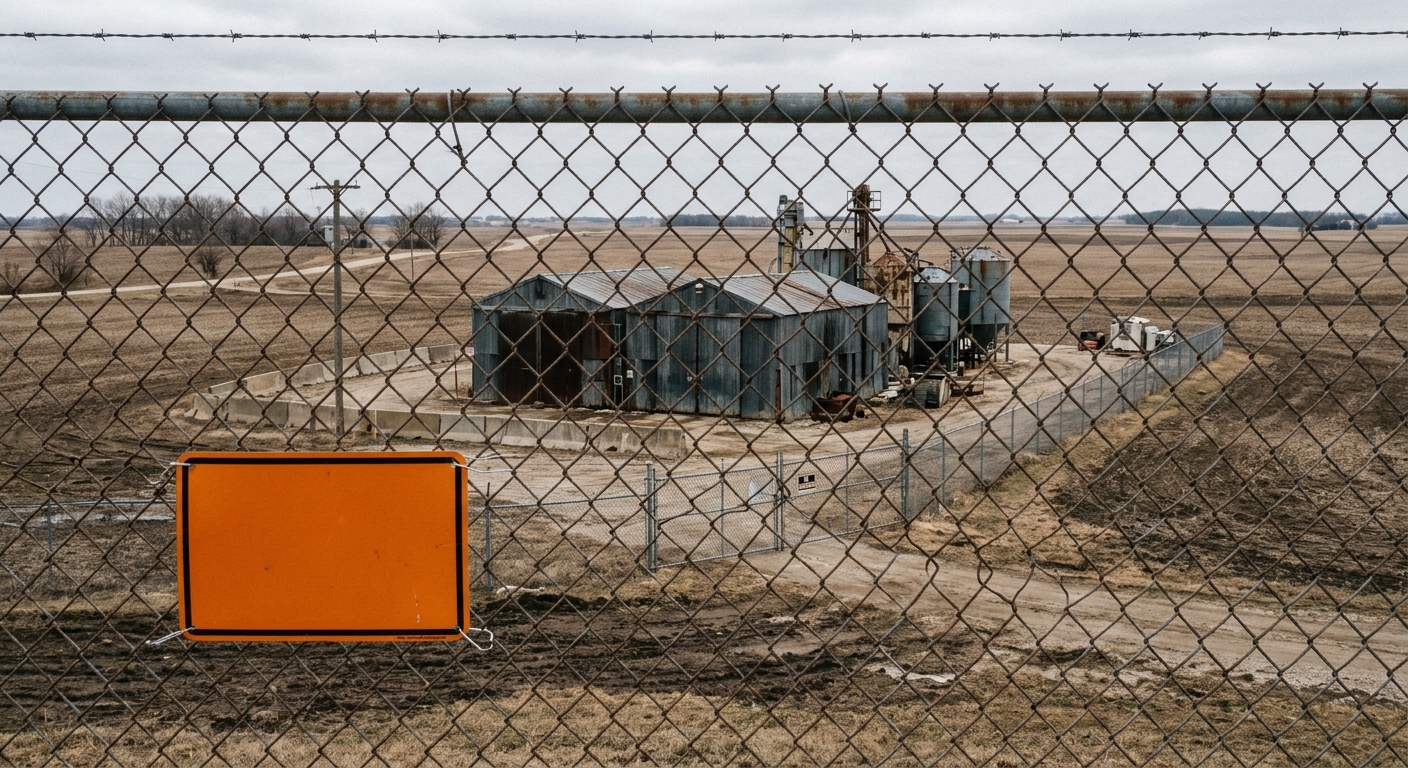
AI-generated illustration; not a photograph of the reported event.
- calendar_today November 20, 2026
Federal Court Blocks Planned Lead Azide Detonation
The U.S. Army's proposed plan to detonate five tons of unstable explosives containing lead azide at the Iowa Army Ammunition Plant has been placed on indefinite hold by a federal court as of Friday. This decision came after environmental groups challenged the emergency permit that had allowed the detonation.
Environmental Groups File Lawsuit Against EPA Permit
The Iowa Environmental Council and the Sierra Club Iowa Chapter filed a lawsuit on Thursday, taking issue with the validity of the Environmental Protection Agency's emergency permit. They argued that local residents were given extremely short notice and were unable to properly prepare for potential health and safety risks. The groups also claimed that the EPA had not made public the evidence supporting the demolition as the best course of action for safety and health, preventing independent evaluation.
Court Grants Indefinite Stay
Responding to an emergency motion, the U.S. Eighth Circuit Court of Appeals issued a one-sentence order granting an administrative stay on the EPA's permit. This action postpones the detonation until the court fully considers and rules on the pending motion. The demolition, initially scheduled for noon Friday, was delayed to Monday but now has been paused with no concrete new date, leaving its future uncertain while the legal challenge proceeds.
Details Behind the Proposed Detonation
The Iowa Army Ammunition Plant, located in Middletown, Iowa, has stored 68 barrels—about five tons—of lead azide for over 20 years in containers covered by earth, kept stable in a bath of ethanol and water, according to Justine Barati of Army Sustainment Command. A routine inspection earlier this year found that some stabilizing water had evaporated, increasing the volatility of the material. The Environmental Protection Agency stated the explosives had recrystallized as a result of this deterioration, amplifying risks of a possible accidental explosion during movement or continued storage.
Concerns Over Toxic Dust and Environmental Impact
Acting U.S. Army Secretary Adam Telle noted that a "controlled detonation" was deemed the safest option for disposal. However, this process would produce a toxic dust plume containing lead particles. Maps from Friday suggested the plume could travel north across eastern Iowa, over the Mississippi River, and potentially into northwestern Illinois, an area home to thousands of residents and agricultural land. There are concerns about dust settling on farms, homes, playgrounds, and outdoor surfaces, raising the risk of lead contamination.
Residents of Middletown had been asked to evacuate temporarily during the original demolition window, while the Army also cautioned about potential structural damage, including shattered windows, to buildings in the area.
Bipartisan Lawmaker Appeal for Delay and Alternative Solutions
In response to these risks, a bipartisan group of Illinois and Iowa lawmakers sent a letter to the Pentagon and EPA requesting a halt to the detonation and a reconsideration of safer alternatives. Their letter emphasized potential health hazards and called for additional time to evaluate and pursue less hazardous options. Signatories included U.S. Senators Dick Durbin and Tammy Duckworth, U.S. Representatives Darin LaHood, Mary Miller, and Eric Sorensen, Illinois Governor JB Pritzker, and Senators-elect Juliana Stratton and Josh Turek.
Related coverage
Source: cbsnews.com.


