
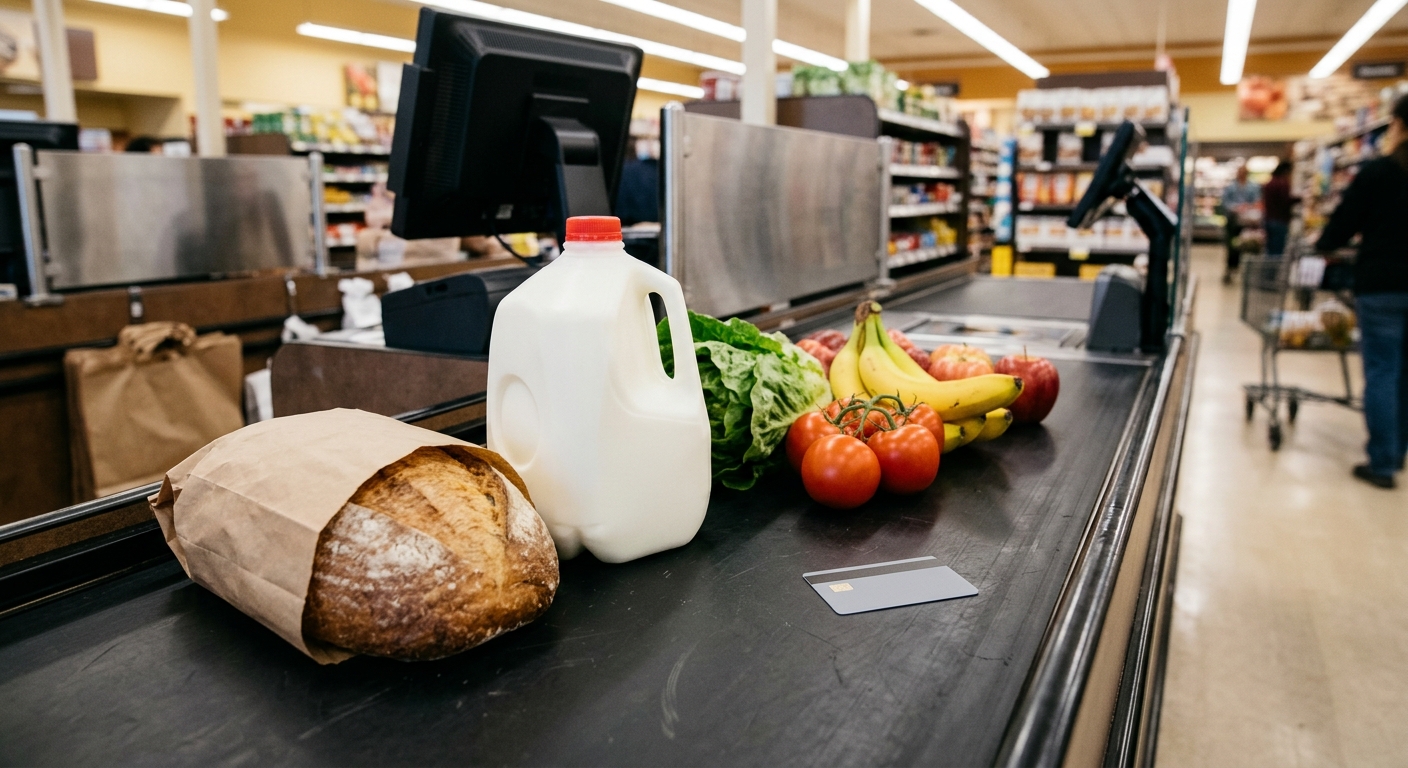
AI-generated illustration; not a photograph of the reported event.
- calendar_today November 22, 2026
Grocery Prices Climb 32% Since 2020
Shoppers across the United States are feeling the pinch at the checkout as grocery prices have soared 32% compared to 2020, according to the Bureau of Labor Statistics. With Thanksgiving approaching, many families are finding it increasingly challenging to afford holiday meals and everyday groceries. One mother, shopping with her daughter, shared with CBS News, "Feels like all my money goes to food."
Food Insecurity and Shifts in Shopping Habits
Though the U.S. Department of Agriculture no longer reports food insecurity figures in the same way, nearly 14% of Americans stated in 2024 that they were struggling to eat. As a result, consumers are changing where they shop for groceries. Discount chains like Aldi, Lidl, and Food 4 Less are gaining market share, creating stiff competition for traditional supermarkets such as Kroger.
David Rinaldo, chief operating officer at Aldi, noted a cultural shift: “I never would have dreamed we'd ever get to the point that it would be that mainstream, that people would come to a limited assortment discount grocer to be where they shop.” Aldi alone plans to open 150 new stores this year, reflecting increased demand for lower-priced options.
Private Label Brands Lead Grocery Shelves
Part of the appeal at these discount stores is their emphasis on in-house brands. Approximately 92% of Aldi’s merchandise consists of private label goods contracted from manufacturers. These aren’t the generic brands of past decades, but rather targeted product lines designed for specific markets. Rinaldo explained, “Nine out of the last ten years, private label has grown faster than national brands.” Private label growth signals a significant trend in grocery shopping, as shoppers seek value over brand-name recognition.
Rising Grocery Debt: Credit Cards and Buy Now, Pay Later
The cost of food is also altering the way Americans pay for groceries. A recent Urban Institute survey found that about 35% of Americans are using credit cards for grocery purchases, and one in four is struggling to pay off that debt. The financial strain is exacerbated by the growing use of digital layaway services, or Buy Now Pay Later (BNPL) apps such as Klarna, Splitit, Affirm, Sezzle, and Zip.
Urban Institute senior researcher Cassandra Martinchek commented, "That's a substantial share of families that are needing to turn to credit to purchase their groceries, and then taking on debt in the process of doing so.” The survey revealed that 1 in 10 shoppers use BNPL apps for grocery shopping, but more than a third of them have missed a payment. These missed payments can eventually harm users’ credit and future financial stability.
Families Struggling to Make Ends Meet
Jordan Williams, a mother and educator at the University of North Carolina at Greensboro, experienced the cycle of grocery debt firsthand. She used a BNPL app to buy groceries but fell behind on payments, leading her account to be locked until the balance was fully paid. “I couldn't afford $200 in groceries the first time, I can't afford $160 today, all of this, and you can't use the app anymore. And after 30 days, it starts to take a hit on your credit as well,” Williams explained.
Williams, who also works as a social media influencer, reflected on her situation: "If this is what it looks like for me, what does that look like for everybody else?" Many Americans are left stretching their budgets thin and relying on potluck meals for holiday gatherings, as the cost of feeding extended family and friends becomes prohibitive without contributions from all attendees.
Outlook Remains Challenging
Although gas prices are easing, the price of groceries remains high. The increase in grocery prices is expected to slow by next Thanksgiving, but for many, the traditional image of a Thanksgiving feast is becoming less attainable.
Source: cbsnews.com.


