- calendar_today August 25, 2025
.
Germany, France and the United Kingdom will reportedly invoke the return of United Nations sanctions on Iran on Wednesday. The mechanism would reimpose the penalties lifted under the 2015 Iran nuclear deal. It could be triggered as early as Thursday, CNN reported on Wednesday, citing three European officials. The process takes 30 days.
Europeans leaders hope Iran will use that time to engage in serious talks, allow its facilities to be inspected by international officials, and reverse its course on the nuclear deal. Iranian leaders have threatened to retaliate with “horrible” force if the UN sanctions return, raising fears of more instability in a region rocked by conflict just weeks ago.
Snapback Approaching Deadline
The mechanism is part of the 2015 Joint Comprehensive Plan of Action. It allows for the restoration of UN sanctions against Iran if Tehran is found to be in violation of the JCPOA. Snapback authority expires in October.
Iran has increased its nuclear capabilities beyond the JCPOA’s limits since former President Donald Trump unilaterally pulled out of the deal. It claims its program is peaceful, but inspectors and outside analysts have raised alarms as its program approaches weapons-grade.
“Going back to the original JCPOA would be almost impossible,” Rafael Grossi, director-general of the International Atomic Energy Agency, said on Wednesday.
Grossi met Wednesday with U.S. Secretary of State Antony Blinken and his European counterparts in Washington, where the officials had met earlier in the week. They spoke of the growing deadline. Blinken’s office said the snapback was “a very powerful piece of leverage on the Iranian regime,” and said he coordinated the effort with European leaders this week.
Inspectors Return for Now
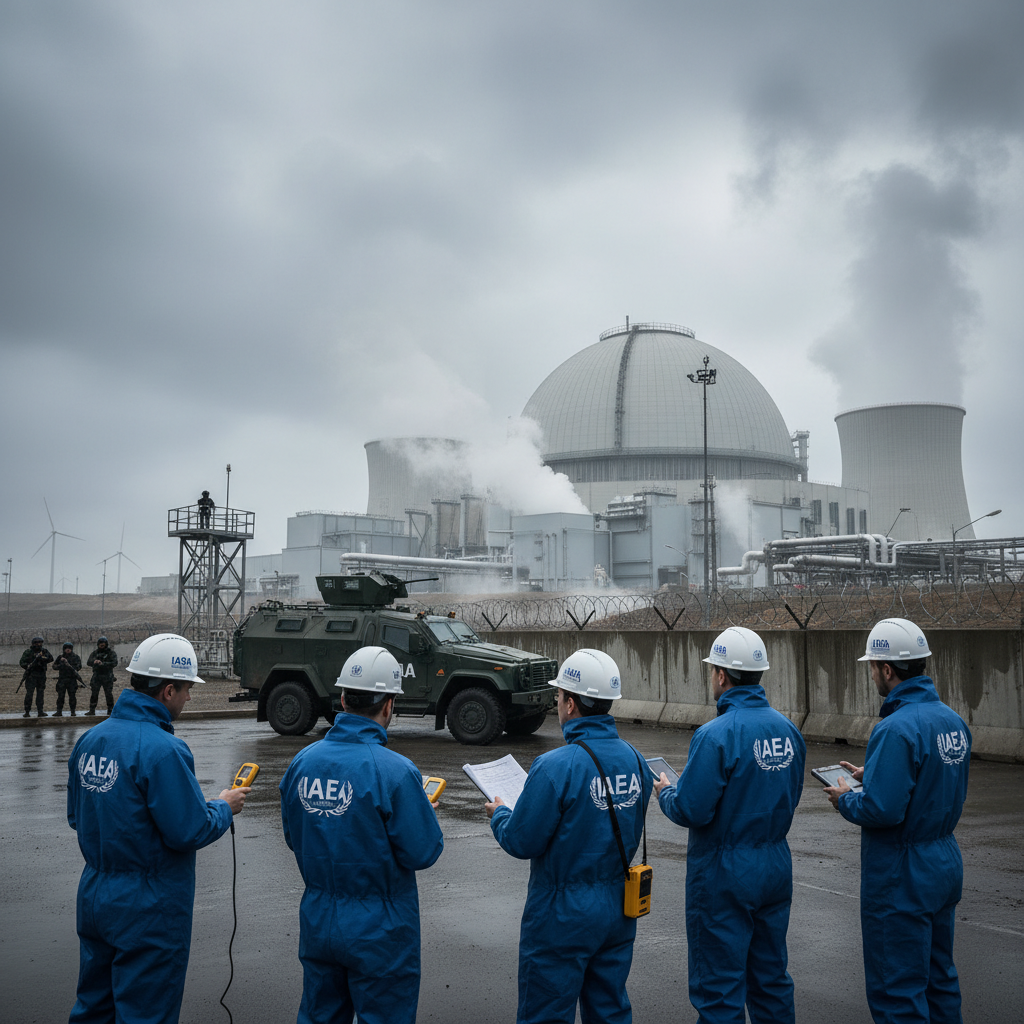
The parliament approved legislation earlier this month that would prevent international inspectors from visiting Iranian nuclear sites, though teams have returned in recent days. Grossi said Wednesday that the agency’s personnel were at Bushehr nuclear power plant, following up on a previous visit.
“Today we are inspecting Bushehr,” he told reporters. “We are continuing the conversation so that we can go to all places, including the facilities that have been attacked.”
The IAEA’s ability to inspect Iran is based on the Nuclear Non-Proliferation Treaty, which Iran has not withdrawn from. Tehran has reportedly considered doing so if sanctions return.
Iranian Foreign Minister Abbas Araghchi said the agency was there to monitor the replacement of fuel at Bushehr. He told state media it was at the instruction of Iran’s Supreme National Security Council. But the IAEA cannot inspect other sites. Araghchi denied there was a new deal for “new cooperation.”
Fallout from Recent Conflict
Conflict over Iran’s nuclear program is on the rise. Israeli forces targeted Iranian nuclear facilities in June. Iran retaliated, sparking a 12-day conflict that saw missiles strike Israeli cities, and U.S. forces fire on three Iranian sites in the last days.
The IAEA had to withdraw its inspectors from Iran in July after the fighting made it impossible to monitor facilities. In August, satellite images showed “potential bomb damage to at least two entrances” at Isfahan Nuclear Technology Research Center.
The IAEA was accused by Tehran of giving Israel the pretext for its strikes by making Iranian non-compliance with safeguard rules public.
Divisions Inside Iran
Allowing IAEA inspectors into some facilities to monitor the fuel replacement has drawn criticism from inside Iran. Parliamentary member Kamran Ghazanfari told Iran newspaper Entekhab on Wednesday that Ghalibaf’s approval of limited inspections “was an explicit violation of the law suspending relations with the IAEA.”
Iran’s parliament approved the law in July in the aftermath of the Israel conflict. The legislation said it was to protect the country against “foreign reaction and fabricated measures,” and cited the IAEA reports as being “one-sided and inciting against the Islamic Republic of Iran.”
Diplomatic Window Narrowing
European negotiators met with Iranian officials in Geneva on Tuesday in a last-minute bid to avoid snapback. But the sources said little progress was made. Ahead of the Israel conflict, U.S. envoy Steve Witkoff was actively engaged in diplomatic talks with Iran to work out a new nuclear deal. They had collapsed in the conflict.
Grossi on Wednesday said he was still hopeful the next month would be used for de-escalation. “Don’t forget that there is still time, even if there is the triggering thing, there is a month, and many things could happen,” he said.
Iran’s program, and domestic politics, are under increasing scrutiny. As the UN snapback authority winds down, the next month will show if diplomacy has a chance or if sanctions and confrontation will be the norm for the near future of Iran’s nuclear program.