
- calendar_today October 10, 2026
Widespread Power Outages Follow Hurricane Isaias
As Isaias weakened into a post-tropical cyclone, severe power outages swept through the Southeast United States. According to PowerOutage.com, more than 884,000 customers were left without power on Saturday morning. The latest breakdown lists Florida at 430,443 outages, Alabama at 326,057, and Georgia at 127,905. Earlier reports recorded over 860,000 without electricity in these states by 7:30 a.m. Saturday.
Dangerous Winds and Rain Continue After Landfall
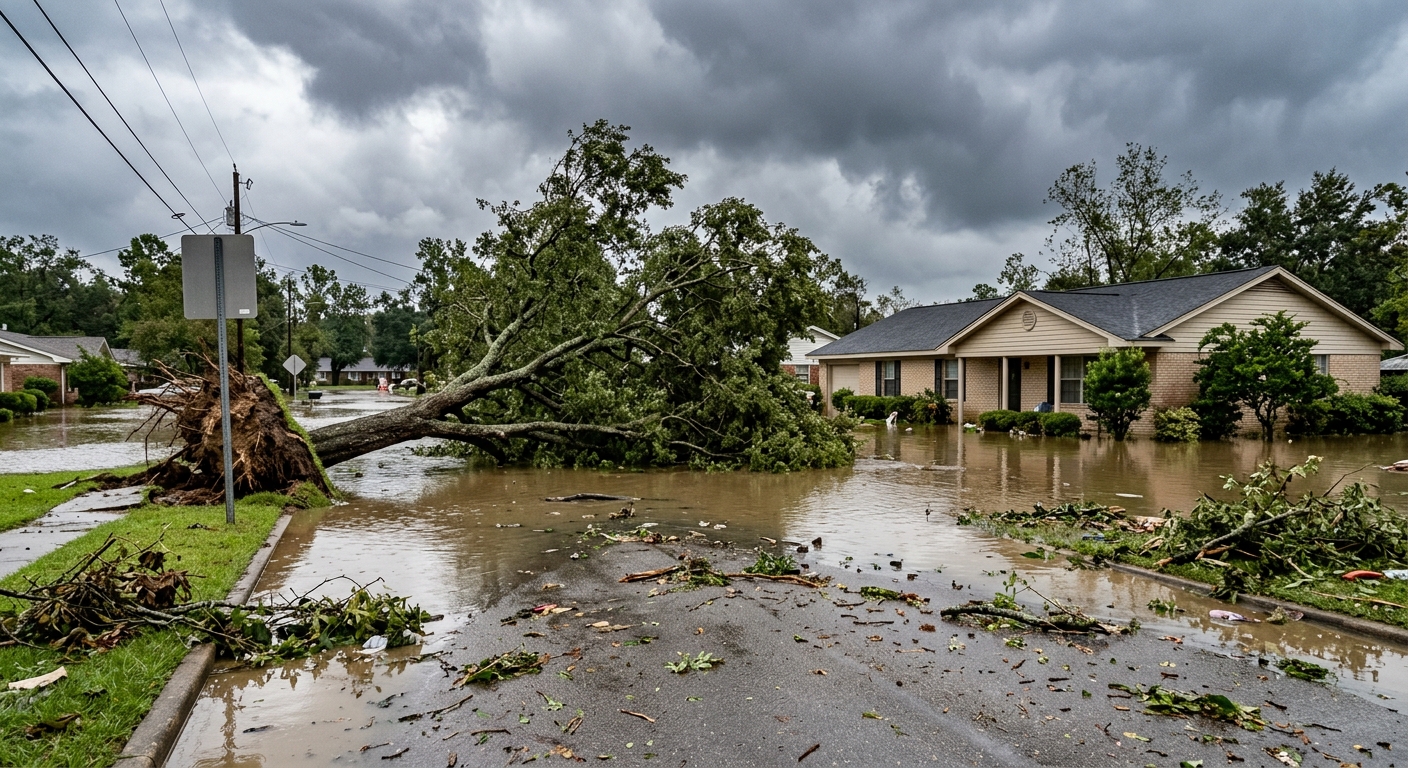
Though Isaias lost its hurricane strength after making landfall as a Category 2 hurricane on Friday night, it retained the ability to cause significant damage. The storm’s sustained winds remained around 35 mph, with stronger gusts. Meteorologists noted strong wind gusts affected multiple regions in Florida, leaving many roads blocked by downed trees and power lines, particularly in southern Alabama counties.
Alabama and Florida Declare States of Emergency
Both Alabama and Florida declared states of emergency ahead of the storm’s arrival. President Trump approved federal emergency declarations for both states on Friday night, enabling the Federal Emergency Management Agency (FEMA) to assist in response and recovery efforts. Alabama Governor Kay Ivey urged residents to stay informed and warned of ‘strong winds, heavy rain, and possible spinoff tornadoes’ as Isaias moved through the region. Georgia Governor Brian Kemp also declared a state of emergency in his state.
Flooding and Rainfall Threats
The National Hurricane Center reported early Saturday that Isaias, moving at 14 mph with maximum sustained winds near 35 mph, would continue to weaken through the weekend and dissipate by Sunday. Nonetheless, the storm posed ongoing threats of rainfall and flooding. Forecasts predicted up to 8 inches of rain for parts of southern Alabama, the Florida Panhandle and Big Bend, and southwest Georgia, with localized totals of up to 15 inches possible. In other areas of the Southeast, rainfall could reach 5 inches, with isolated pockets up to 10 inches, especially in the Southern Appalachians and along the Carolina coast. The Center warned of potentially life-threatening flash, urban, and river flooding across the region.
Local Impact and Response
Hurricane Isaias made landfall near Destin, Florida, at around 8 p.m. Eastern Time, resulting in widespread flooding in the Florida Panhandle. Police in Pensacola warned residents to stay off the roads due to debris and downed power lines. Counties in the area, such as Houston County in Alabama, closed all roads as emergency responders worked to clear debris and restore safe travel. Many residents, including those in flood-prone areas like Orange Beach, Alabama, took precautions or evacuated as ordered by local officials. In addition to the wind and flooding threats, a risk of tornadoes remained across the eastern Florida Panhandle, Georgia, and the Carolinas throughout Saturday.
Disruptions and Aftermath
Air travel was disrupted with most Friday flights canceled at several Florida Panhandle airports, and road travel was made hazardous or impossible in several areas. President Trump canceled plans to attend a football game in Tuscaloosa, Alabama, to avoid diverting emergency resources. The storm was not expected to impact major oil hubs directly, though some analysts warned that fuel prices could rise if power outages affected refining operations. Isaias was forecast to continue producing heavy rain and potential flooding in the Southeast through the weekend, with impacts expected to reach into the Midwest and Northeast by Monday.
Source: cbsnews.com.


