- calendar_today August 20, 2025
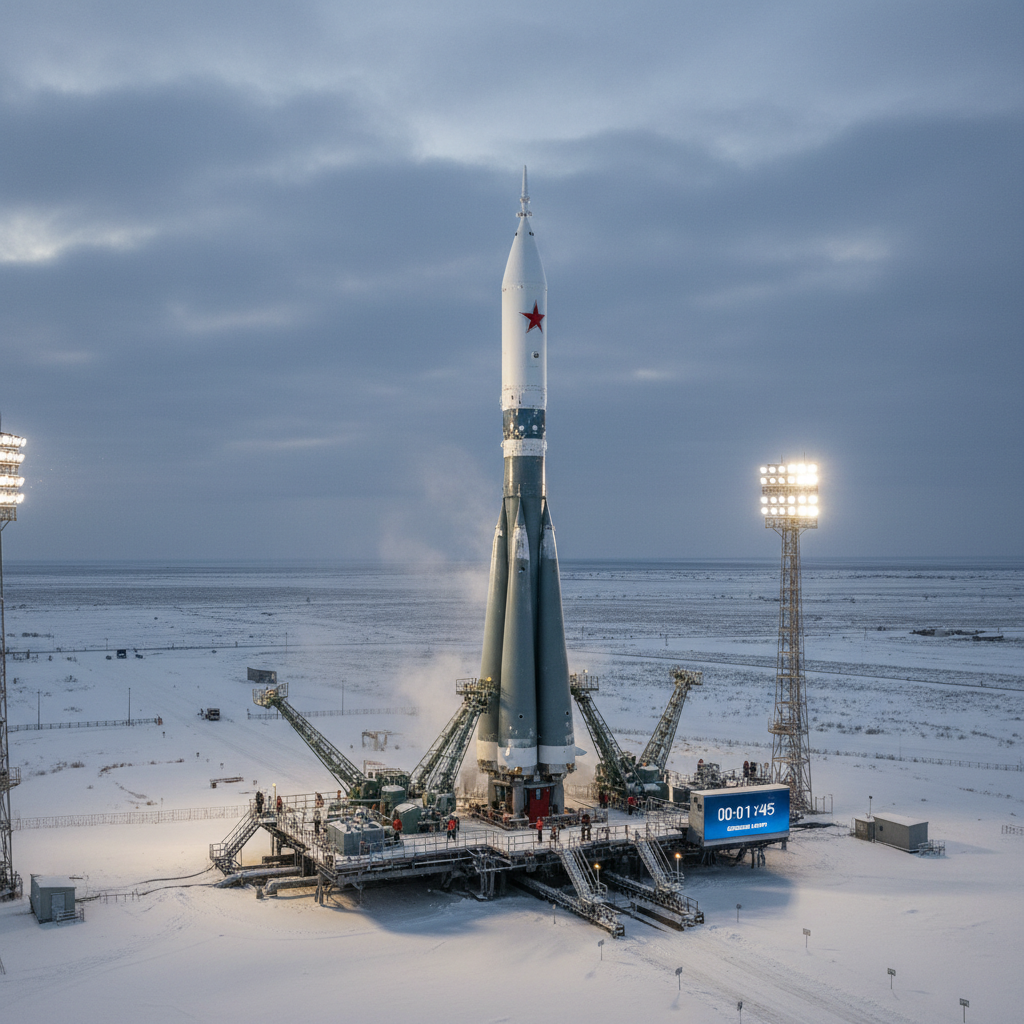
Russia’s latest rocket, Soyuz-5, could launch before the end of the year, the head of the state-run Russian space agency Roscosmos has said. Dmitry Bakanov told the Russian state-run TASS news agency that the vehicle’s maiden flight from the Baikonur cosmodrome in Kazakhstan is on schedule.
“Yes, we are planning for December,” he said. “Everything is in place.”
The Soyuz-5, which will be also named Irtysh after a river that flows through Russia and Kazakhstan, is not intended to be a brand new rocket. Instead, it is designed as an upgraded version of an older Soviet-era vehicle, namely the Zenit-2, first built in the 1980s by Ukraine’s Yuzhnoye Design Bureau.
Zenit-2’s first stage was constructed by Yuzhmash in Dnipro, Ukraine. It would go on to make dozens of launches from the late Soviet era all the way through the 2010s. The original Zenit-2 design was notable for its RD-171 engine, which was also developed by Russia’s NPO Energomash and was at the time capable of generating more thrust than any other liquid-fueled engine in the world.
Zenit’s most successful version was the Zenit-3SL, which began service in the mid-1990s and would be used for dozens of commercial launches, primarily from the Kennedy Space Center in Florida. After the dissolution of the Soviet Union, Zenit production was split between Ukrainian and Russian plants. For years, both countries made an uneasy peace, with Ukraine building rocket stages and Russia providing engines. That, however, all changed after Russia’s full-scale invasion of Ukraine in February 2022.
Russia, in fact, bombed what was formerly Zenit’s production facility in late 2023 with a ballistic missile, making any future cooperation with Ukraine an impossibility. It is against this backdrop that Moscow has been pushing ahead with Soyuz-5, which is designed to fill the gap created by the unavailability of Zenit rockets with a vehicle that is built domestically without Ukrainian components.
Soyuz-5 Vehicle Overview
The Soyuz-5 booster is very much in the Zenit design mold, with only minor improvements. The rocket’s main propellant tanks are slightly larger than the Zenit-2 version, giving it a lift capacity of roughly 17 metric tons to low-Earth orbit. It thus falls in the medium-lift class, alongside such rockets as SpaceX’s Falcon 9. Unlike its American counterpart, Soyuz-5 is 100% expendable.
The rocket’s most noteworthy feature is its RD-171MV engine, which is the latest variant of the Energomash design that once powered both the Soviet Union’s Energia rocket and Zenit series of rockets. In this version, which is exclusively designed, manufactured, and assembled in Russia, no Ukrainian parts are used.
Feeding on a mixture of kerosene and liquid oxygen, the RD-171MV can generate over three times the thrust of a NASA Space Shuttle main engine. It remains the most powerful liquid-fueled rocket engine in the world.
Observers and space analysts point out that the rocket is, in many ways, more a symbol of continuity than a next-generation advance. In fact, despite its intended launch date, the Soyuz-5 is essentially just a tweaked Soviet-era design with no radically new technology.
Space Launch Bridge
For Russia, however, this is not necessarily a bad thing. In addition to expunging Ukrainian-made components from its lineup, Roscosmos also hopes that Soyuz-5 will help it retire its aging Proton-M rocket, thus securing a way of accessing medium-lift space from Russian factories without outside help.
At the same time, Soyuz-5 is not intended to be Russia’s last word in launch vehicle technology. Instead, its true “next-generation” vehicle, Soyuz-7 (also known as Amur), has been repeatedly delayed. Featuring reusable first stages powered by liquid oxygen-methane engines, Soyuz-7 is not expected to fly until at least 2030.
In the meantime, Soyuz-5 will have to do, as a transitional vehicle in the same way that many smaller European space powers have used Russia’s Angara rocket for the last decade. It is expendable, heavy, and somewhat uncompetitive by today’s standards, but it is at least functional and can keep Roscosmos in business until a more serious launch vehicle is developed.
Can Soyuz-5 Compete Globally?
Roscosmos has frequently expressed its desire for Soyuz-5 to become a global competitor, but its vehicle faces an uphill battle to compete internationally. The global launch market has changed considerably over the last decade, as SpaceX has demonstrated new low-cost ways to operate in low-Earth orbit.
An expendable rocket with Soviet origins will struggle to compete against Starlink on price alone. It is not yet clear how the Russian space agency plans to use Soyuz-5 as part of its overall strategy to compete with the likes of SpaceX and Blue Origin.
Roscosmos has continued to operate the Soyuz-2, which has been upgraded over the last decade to the point where it is somewhat capable of crewed missions, and the newer Angara line, which is somewhat larger and therefore able to compete for some heavier launch contracts. Both, however, have had a hard time gaining any real global market share over the last decade.
Soyuz-5, with its Soviet-era origins, faces the same challenge. Whether or not this vehicle can finally do something no other Russian rocket has managed to do over the last decade remains to be seen.
Symbol of Soviet Heritage
On the other hand, the simple fact that Roscosmos was able to bring Soyuz-5 to the launch pad under wartime economic conditions is something of a victory. A successful December launch would show that Russia’s space sector, though under considerable strain, is still able to deliver a new launch vehicle to market.
The Soyuz-5 may not be a next-generation rocket, but in Russia it is a symbol of Soviet heritage. By building domestically a successor to both Zenit and Proton-M, Roscosmos hopes to be able to outlast the current climate of international sanctions and budgetary cuts by depending on its homegrown resources.
Whether the vehicle will ultimately be competitive on the world stage is another question entirely. For now, though, everyone’s eyes are on Baikonur in December, when Soyuz-5 finally makes its debut flight.