- calendar_today August 26, 2025
TikTok is Now in School – Students Learn from this in 2025
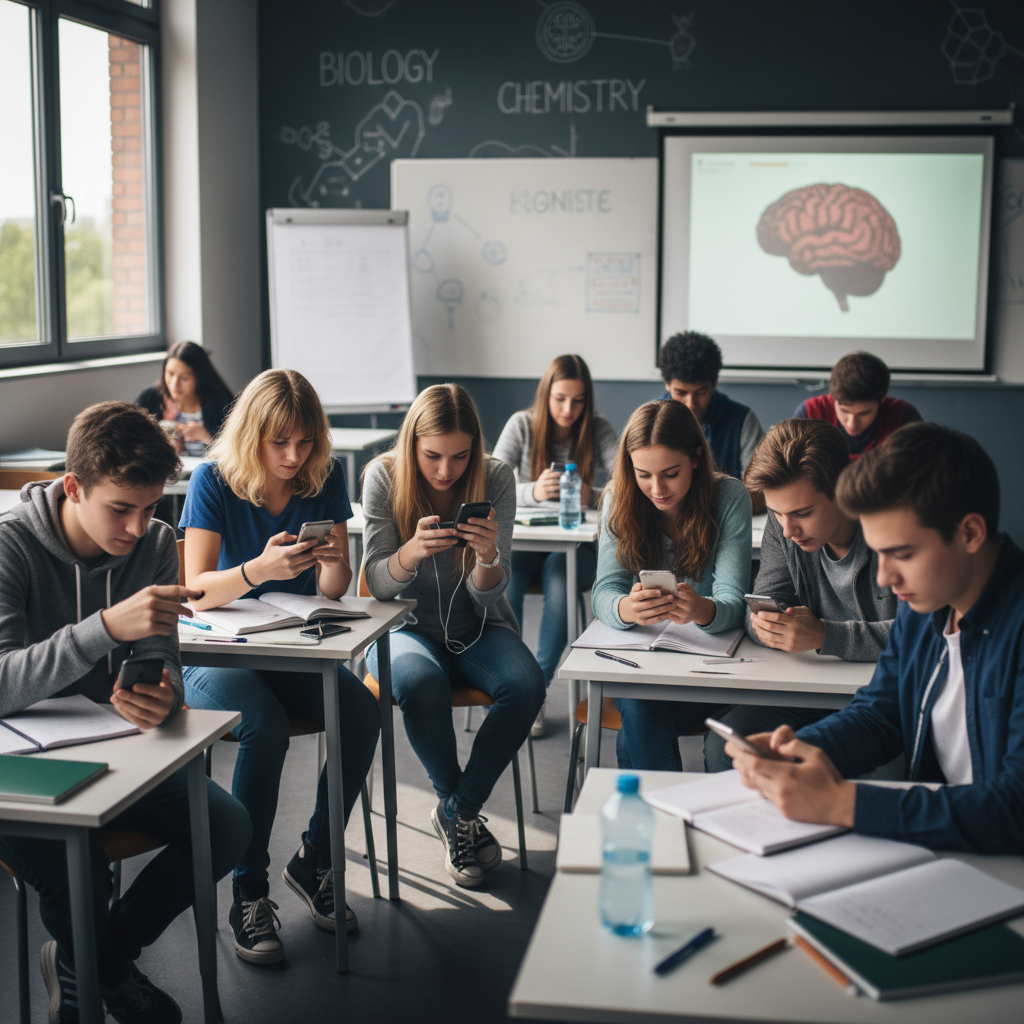
2025, TikTok will no longer be just a dance or enjoyment platform, worldwide and in the USA National 1. As it is becoming the edutainment hub, students get short-form lessons. Students love to learn through scrolling 60-second videos that briefly explain concepts, and by doing so, they clarify their understanding of history and similar subjects. Despite warnings about distractions, many teachers are now assigning “TikTok projects” to boost student engagement.
A MicroLesson at your fingertips
A recent Pew Research Centre report revealed that sixty per cent of Canadians and United States Teens use TikTok daily. Almost half of them follow curriculum-focused channels. As a result, companies like Quizlet and Khan Academy have launched “Shorts “-style feeds. Each video breaks down a single concept, like quadratic formulas or verb conjugation, in less than a minute.
“I ask students to create a 30‑second video on a landmark event,” says Mark Liu, a high‑school history teacher in Toronto. “They research, script, and film. Then we critique each other as a class.” This project drives creativity and enables students to organize facts speedily.
Study Hacks and Quick Tips
TikTok is also promoting collaborative learning, not just formal assignments. Students/Creators with active accounts and followers share quick tips, study hacks, effective learning routines, and mnemonic tricks. For instance, a viral clip containing a hack to remember the complete periodic table has surpassed 2 million views. Further, videos on solving problems and understanding things deeply with facts and figures make life easier for today’s student.
“Young people love how fast it feels,” says Dr. Sandra Patel, an educational psychologist in San Diego. “It matches GenZ’s shorter attention spans. But it also teaches conciseness and clarity.”
Challenges, Misinformation, and Moderation
Yet this micro-lessoning has drawbacks as well. For example, misinformation can rapidly spread as exam tips. One study in EdTech Journal found that twenty per cent of viral educational videos lack facts behind the lessons, leading to factual errors. Hence, New York City and Vancouver schools have issued guidelines to overcome this misinformation. Students must use videos from verified accounts or have their teacher approve them.
However, many educational institutions block TikTok on school networks, and others restrict it during class hours. Although these measures are controversial, critics contend that blanket bans punish students who take advantage of authentic learning content.
Beyond TikTok: A New Ecosystem of Short‑Form Learning
TikTok isn’t alone in this ecosystem; many other digital platforms, including YouTube Shorts and Instagram Reels, have also joined this micro-learning trend. In Chicago, a pilot program is using shorts to teach climate science. A Montreal-based language immersion school uses Reels to practice vocabulary every day. Additionally, textbook publishers are adapting, including QR codes that link to custom short-form videos. Students scan a diagram and watch a 45‑second breakdown of the process.
Impact of Short‑Form Learning in the USA National 1
In the USA National 1, using TikTok and other short‑form video apps is changing how students learn in school. Students now look for quick, clear explanations they can watch between classes, which keeps them more interested. However, this also means schools must pick the correct information for them.
Micro‑lessons are now included in teaching plans to match the faster learning, and teachers are also helping students identify false statements or flaws in the facts provided. Districts are finding ways to allow unfettered internet access, but still protect students from distractions and inaccurate information. This move indicates a trend toward more flexible learning anytime, anywhere, provided guidance and support are in place.
What’s Next? Balancing Innovation and Discipline
Experts predict short‑form learning will be incorporated further into education and study programs. Teachers can now learn to create quality videos through professional development courses. As a result, platform developers add fact-check labels and link to “extended lessons.”
According to Dr. Patel, the goal of innovation is to propel learning forward. As we know, a 30‑second clip can spark curiosity, but it cannot replace depth.
As TikTok and its peers reform study habits, one thing is clear: in 2025, education will no longer be restricted to textbooks and hour‑long lectures. It will be available to every student by watching short clips.