- calendar_today August 24, 2025
The Sandman Season 2 Brings Morpheus’ Story to a Poignant Close
With the second and final season of The Sandman hitting Netflix today, the network’s loose adaptation of Neil Gaiman’s iconic comic series has come to an end. For anyone who enjoyed Season 1 and its vivid depiction of the series’s surreal and offbeat style, there is plenty to love in this concluding chapter.
The Netflix series has always been something of a hybrid of the original comics, both an anthology in the style of the source material and a more straightforward narrative built around Morpheus’ character arc. With that in mind, if Season 1 satisfied fans of the comics, then there’s every reason to believe that the same will be true of Season 2.
Netflix announced in January that Season 2 would be The Sandman’s last. The move sparked some theories that Netflix had decided to axe the series over sexual misconduct allegations against Neil Gaiman, which Gaiman denies. The showrunner, Allan Heinberg, had some comments on the subject during a recent interview with X, where he confirmed that the plan was always for two seasons. Heinberg, who has been open about his reading of the comics, also notes that the team “knew that we had enough story for at least two seasons, but were concerned that we didn’t have enough for a third,” and says that “we were able to get in a satisfying finale for our story and complete the arc of Morpheus.”
Season 1 of The Sandman adapted Preludes and Nocturnes and The Doll’s House as well as bonus episodes “Dream of a Thousand Cats” and “Calliope” from Dream Country. Season 2 instead draws most heavily from Seasons of Mists, Brief Lives, The Kindly Ones, and The Wake. Important elements of Fables and Reflections, especially “The Song of Orpheus” and parts of “Thermidor,” and the Hugo Award-winning “A Midsummer Night’s Dream” from Dream Country also feature heavily. The bonus episode this season adapts the 1993 one-shot spinoff Death: The High Cost of Living. Several storylines are missing entirely, including the events of A Game of You and various short stories, but these omissions don’t hamper the story’s main focus on the Dream King.
The Dream King has a lot to rebuild in the aftermath of the first season, after he escapes from captivity, the return of his talismans, his battle with the outcast Corinthian (Boyd Holbrook), and the resolution of the Vortex crisis. But when he’s summoned by his sister, Death (Kirby Howell-Baptiste), for an obligatory family meeting, Dream (Tom Sturridge) knows it won’t be good. Desire (Mason Alexander Park), Despair (Donna Preston), and Delirium (Esmé Creed-Miles) are all summoned as well and prepared for battle when Death tells them that their father, Destiny (Adrian Lester), has summoned them all, and he won’t take no for an answer.
The meeting gets right down to business, sending Dream on a mission to rescue Nada (Umulisa Gahiga), the queen of the First People and Dream’s former lover, from Hell, the place he sentenced her to. Dream’s rescue mission forces a second unwanted interaction with Lucifer (Gwendolyn Christie), who has never forgiven Dream for her Season 1 loss. When Dream finally tracks Lucifer down, he’s in for a surprise. Instead of holding a battle to the death, Lucifer announces that she’s handing over the key to an empty Hell and resigning, leaving Dream to choose who she wants as the next ruler of Hell from a variety of options, including Odin, Order, Chaos, and the demon Azazel.
Delirium has a lot of questions about their missing brother, Destruction (Barry Sloane), who abandoned the family by abandoning their shared domain hundreds of years ago. Delirium’s questions have the effect of setting Dream on a collision course with his end, the spilling of familial blood, and an encounter with the wrath of the Kindly Ones.
Standouts, missteps, and finale
Season 2 doesn’t drop the ball in terms of production value. From a visual point of view, the adaptations and the general look of the show remain strong. The casting is also top-notch, and despite some complaints about the pace being too slow, that has always been the point.
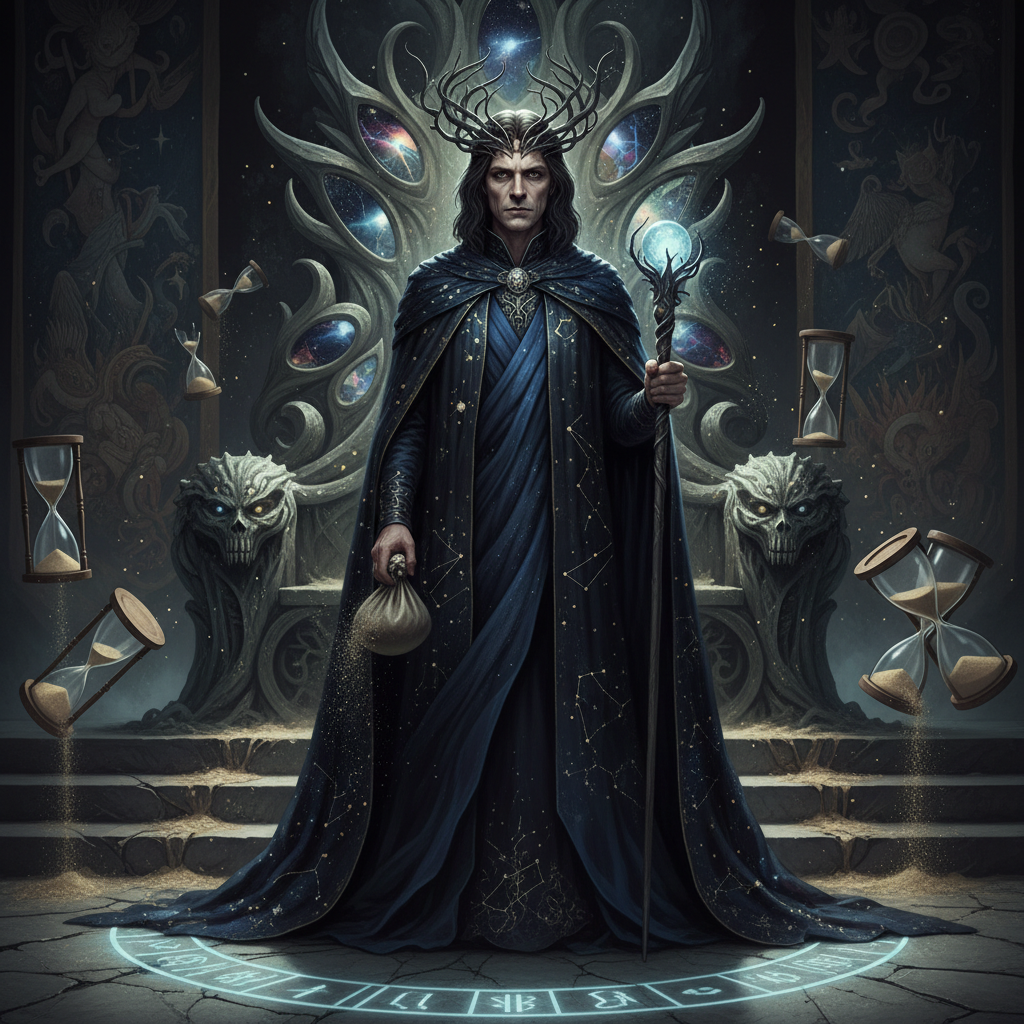
The absolute low point of Season 2 is “Time and Night,” in which Dream has a meeting with his parents, Time (Rufus Sewell) and Night (Tanya Moodie). It’s worth saying that these episodes are canonically fine. The Endless are the children of Time and Night, after all. But while they have the pedigree to carry these moments, Sewell in particular, the dialogue is very clunky, and it’s not the sort of conversation that a god would have. The interaction feels less like a divine drama and more like an encounter in group therapy.
There are so many iconic and just damn memorable moments across the series, and Season 2 is no exception: Lucifer asking Dream to cut off her wings; the goddess Ishtar (Amber Rose Revah) casting off all social convention to dance for the last time in her true divine form; Dream telling William Shakespeare he has to write The Tempest; a reformed Corinthian pining for Johanna Constantine (Jenna Coleman); Orpheus singing his mournful song for the dead in the Underworld; Dream putting his son out of his misery; and Mervyn Pumpkinhead (Mark Hamill), Fiddler’s Green (Stephen Fry), and Abel (Asim Chaudhry) meeting the rage of the Furies as they slash their way through Fiddler’s Green and reduce it to a forest of smoking stumps.