- calendar_today August 21, 2025
.
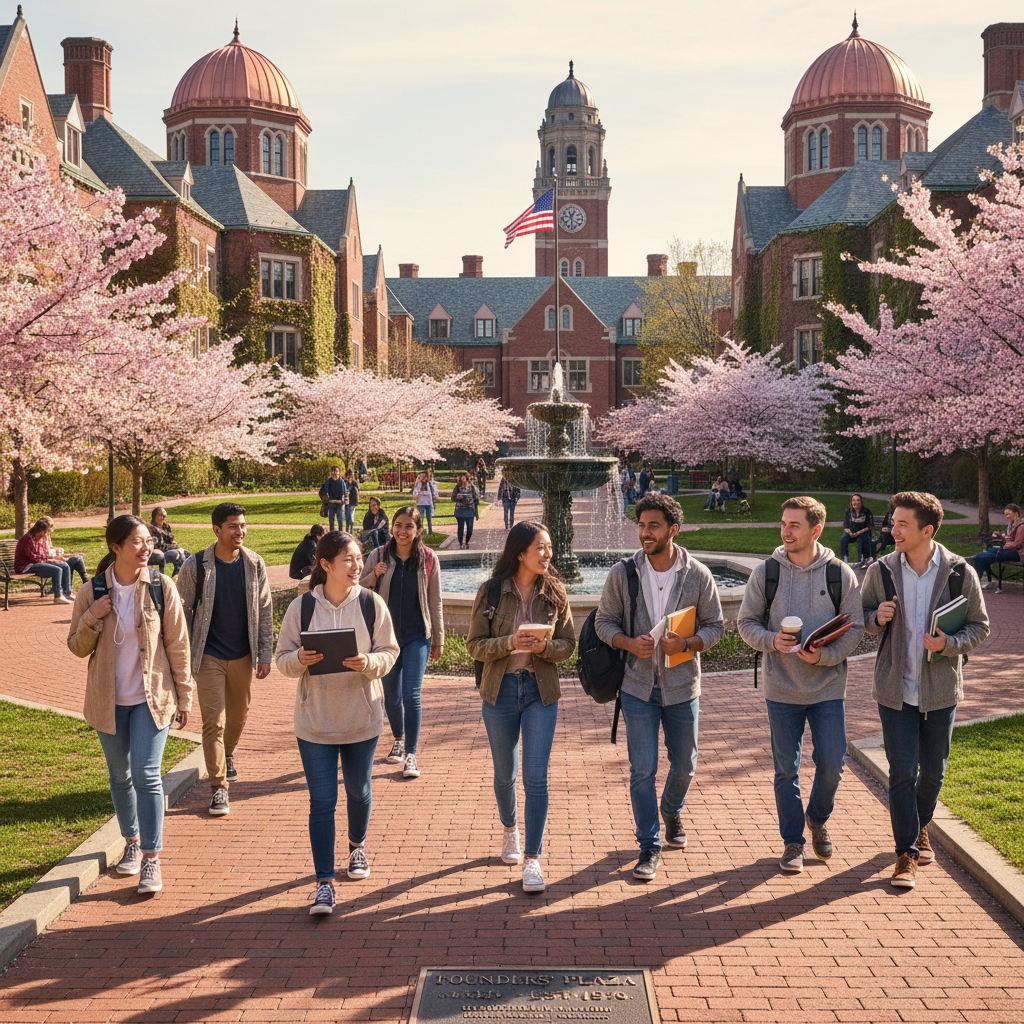
Donald Trump on Monday said the United States would allow 600,000 Chinese students to attend American colleges, despite the prolonged trade tensions with China.
Trump announced the White House on Monday, maintaining pressure on Beijing with continued tariffs and talk of further limitations.
“I hear so many stories that we’re not going to allow their students. We’re going to allow their students to come in. It’s very important, 600,000 students. It’s very important. But we’re going to get along with China,” Trump said to reporters.
His comments came as the U.S. and China continue to engage in a standoff over tariffs, with Washington imposing sweeping taxes on Chinese goods earlier this year. The new 145 percent tariff on all Chinese products elicited a similar 125 percent tariff on all U.S. exports from Beijing. Negotiations in Geneva last month led to an agreement to halt the introduction of further tariffs, but Trump has said he may seek to levy new ones in the coming weeks. Last week, he suggested a 200 percent tariff on Chinese-made magnets, over concerns the country has “almost a total monopoly” on production.
“China, intelligently, went and they sort of took a monopoly on the world’s magnets,” Trump said. “It’ll probably take us a year to have them.”
U.S. universities currently host some 270,000 students from China, with Trump’s 600,000 figure representing a more than doubling of current numbers.
The increase has the potential to pump billions of dollars into the higher education system. Chinese students in the United States pay some of the highest tuition rates of all international students, and their numbers are closely tracked by universities as a key revenue stream. A recent report by investment bank UBS found that the number of Chinese students has fallen in recent years, a trend that Trump’s policy may help to reverse.
A Loosening of Earlier Hardline Stance
The president’s comments represent a shift from earlier rhetoric within his own administration. In May, Secretary of State Marco Rubio announced the U.S. would “aggressively revoke” visas for Chinese citizens working in sensitive research roles or directly for the Chinese Communist Party. The move was blasted by universities and higher education experts, and Trump said in June that he had “always been in favor” of Chinese students coming to the U.S. Trump’s Monday statement appears to formalize that shift in policy.
The president’s remarks came just before a meeting with South Korean President Lee Jae Myung. He told reporters he would be open to meeting with Chinese President Xi Jinping, and sounded optimistic that he could come to a deal on the issue of tariffs.
“As you know, we’re taking a lot of money in from China because of the tariffs and the different things. It’s a very important relationship,” Trump said. “It’s a much better relationship economically than it was before with Biden. But he allowed that. They just took him to the cleaners.”
Trump is continuing to play with the idea of a major meeting with Xi, having spoken on the subject last week, when he said he would be “honored” to have a conversation with the Chinese president.
“In one form or another, I would say yes,” he said of a potential meeting. “I think it’s a very important thing to do, absolutely.”
With his comments on Monday, Trump appeared to be continuing to encourage future talks while signaling that Washington would not soften its economic stance with China. He said that while Beijing was “massively subsidizing their companies” and “trying to take advantage of the U.S.,” he wanted to see Chinese students given opportunities at American universities.
“I don’t want them to be taken advantage of, either, but they are,” he said. “But we want their students to come to our universities. We want to take their money.”