- calendar_today August 9, 2025
As trade tensions between the United States and China flare up once again, financial markets are on edge, and investors are bracing for economic aftershocks. The first quarter of 2025 has delivered a fresh round of tariff hikes, retaliatory measures, and international complaints, fueling uncertainty across sectors from tech to agriculture.
With President Trump back in office and taking an aggressive stance on trade, Beijing has responded in kind, signalling the reawakening of a global trade war. The stakes for investors couldn’t be higher.
A Breakdown of the 2025 Trade Escalation
In early April, President Trump authorised sweeping tariffs on Chinese imports, citing persistent trade imbalances, national security, and the need to revitalise U.S. manufacturing. The new tariffs include a 54% levy on a wide array of goods, from electronics to automotive components.
China’s retaliation came quickly:
- 34% Tariffs on U.S. Goods:
Effective April 10, China will apply 34% tariffs on all U.S. imports, increasing costs for exporters and reducing price competitiveness in one of the world’s largest markets. (Source: Reuters) - Rare Earth Export Controls:
As a countermeasure with wide industrial implications, China has imposed new restrictions on rare earth mineral exports to the U.S.—a move that threatens to choke supplies vital for semiconductors, batteries, and defence systems. (Source: The Times of India) - WTO Complaint Filed:
Beijing has lodged a formal complaint with the World Trade Organization (WTO), challenging the legality of the U.S. tariffs and requesting mediation. (Source: Deccan Herald)
U.S. Market Reactions: Winners and Losers
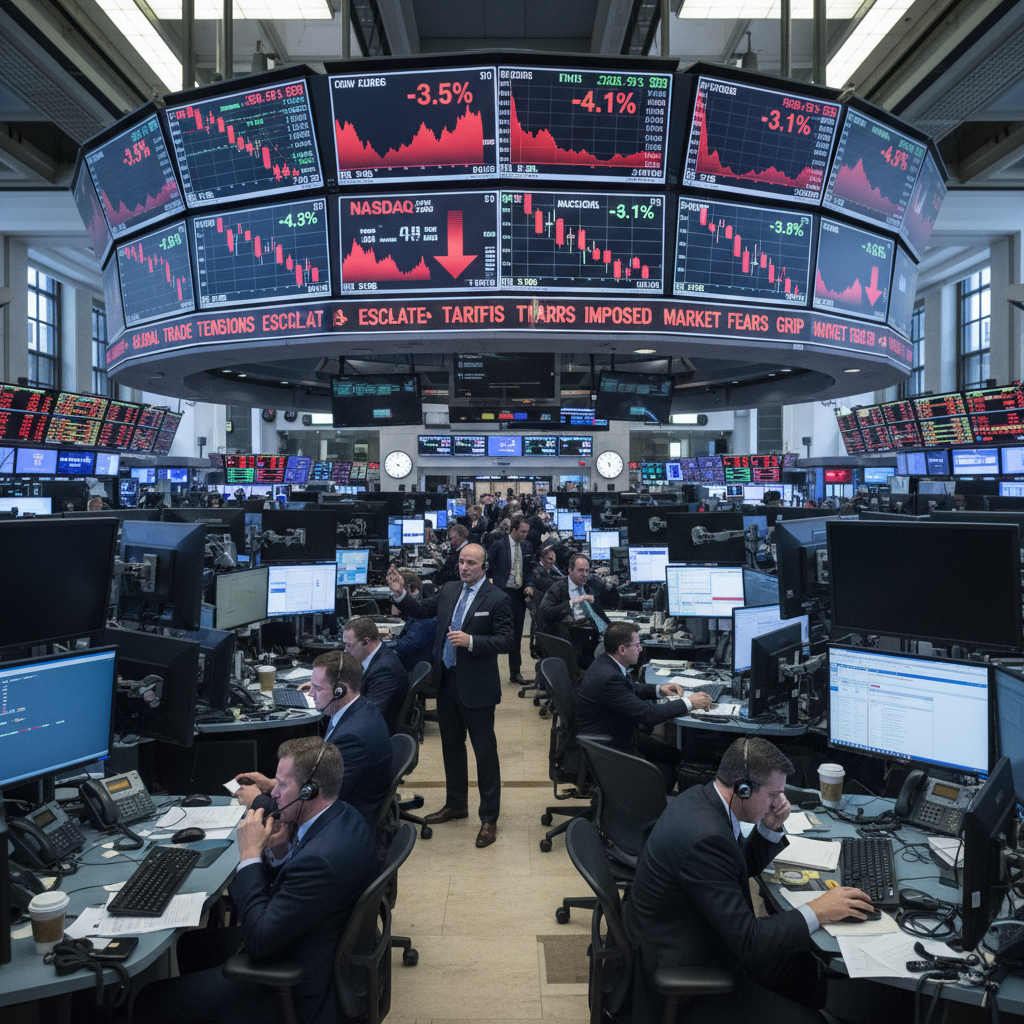
The financial fallout was immediate. Major indices turned sharply lower, with the S&P 500 and Nasdaq each registering multi-day losses not seen since the COVID-19 pandemic.
Tech Stocks Take a Hit
Technology companies with significant exposure to Chinese production and consumers are suffering the most.
- Apple lost over $300 billion in market cap, according to The Guardian, as investors worry about increased costs and potential retaliation.
- Chipmakers like Nvidia and Qualcomm are facing additional headwinds from both supply chain strain and weakened demand overseas.
Agriculture Under Pressure
The U.S. farm economy, already strained by years of market volatility, is once again in Beijing’s crosshairs.
- Soybean and pork exports have dropped by a staggering 59% in the first two months of 2025 compared to early 2024.
- China is ramping up purchases from Brazil and Argentina, potentially displacing American suppliers in the long term. (Source: Reuters)
Manufacturing and Energy
U.S. manufacturers relying on rare earth imports are scrambling to secure alternative suppliers. The disruption affects:
- Electric vehicle (EV) makers
- Renewable energy firms
- Aerospace and defence contractors
Many firms now face higher input costs and possible production delays, which threaten their earnings outlooks for the second half of the year.
Smart Strategies: What Investors Should Do Now
While volatility is unsettling, it can also open up strategic opportunities. Financial advisors are urging U.S. investors to consider several prudent adjustments:
1. Diversify Across Sectors and Geographies
Avoid overexposure to sectors heavily tied to China or dependent on fragile supply chains. Spread investments across global markets and industries that are less vulnerable to geopolitical friction.
2. Lean Into Domestic-Focused Companies
Stocks in logistics, infrastructure, and American-based manufacturers may benefit from federal support and supply chain reshoring incentives. These firms are less susceptible to foreign policy disruptions.
3. Consider Alternative Assets
Commodities, real estate investment trusts (REITS), and Treasury Inflation-Protected Securities (TIPS) can help hedge against inflation and trade-related market swings.
4. Stay Informed and Nimble
Keep an eye on trade negotiations, earnings reports, and industry-specific updates. Reacting early to policy signals can make the difference between protecting capital and facing unexpected losses.
The Road Ahead
The re-escalation of U.S.–China trade tensions in 2025 signals a potential long-term reset in global economic relations. Investors need to brace for more policy volatility, potential supply chain disruptions, and shifting consumer demand.
But this is not uncharted territory. As in previous trade cycles, some sectors will contract, while others adapt and thrive. Investors can protect their portfolios and uncover new growth opportunities by prioritizing diversified strategies and watching market signals closely.
Stay informed. Stay diversified. And above all—stay ready.
For real-time analysis and trade insights, follow our ongoing market coverage.