- calendar_today August 13, 2025
Industrial Development Fuels Momentum
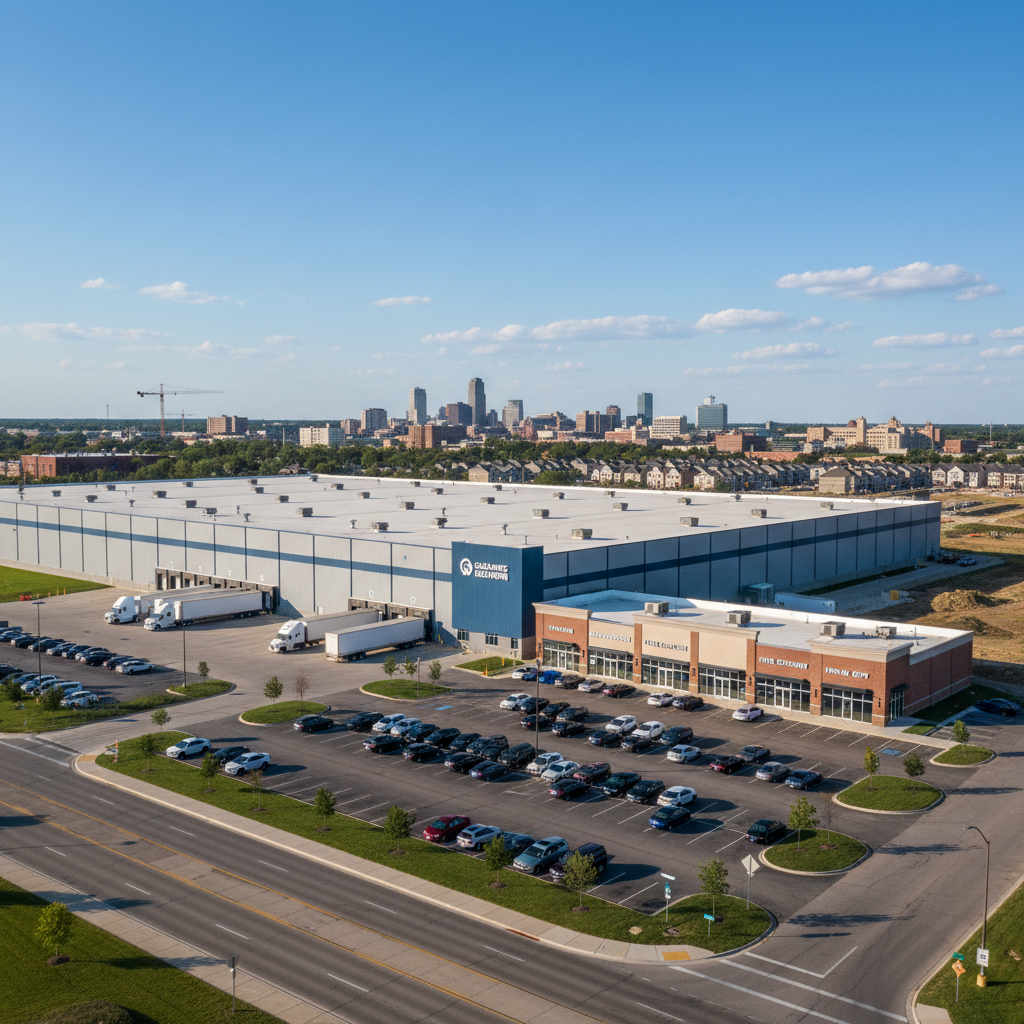
Industrial space continues to be the cornerstone of commercial activity across the Dakotas. Both states benefit from their central U.S. location, agricultural processing infrastructure, and growing logistics demands. In 2025, warehouse and distribution development remains particularly strong around Fargo, Grand Forks, Sioux Falls, and Minot — where access to major highways and freight rail networks attracts investment.
Cold storage facilities are also expanding, driven by regional agri-business and food distribution needs. According to local brokerage reports, industrial vacancy rates remain below 4% in major metros, and average lease rates rose 6–8% year-over-year in some submarkets.
The energy transition is playing a unique role, too. North Dakota’s Bakken oil patch continues to stabilize, but investment is diversifying toward carbon capture projects and clean energy manufacturing in cities like Williston and Dickinson. These shifts are bringing new types of industrial tenants to historically energy-focused towns.
Retail Anchors in Growth Hubs
Retail real estate across the Dakotas is adapting rather than declining. Malls in larger cities, like West Acres in Fargo and The Empire Mall in Sioux Falls, are investing in experience-driven tenants, medical clinics, and lifestyle offerings to maintain foot traffic.
More notably, neighborhood centers and strip plazas in fast-growing suburbs are thriving. Grocery-anchored retail, quick-service restaurants, and urgent care facilities have proven highly resilient — especially in communities seeing housing growth and an influx of young families.
“Retail in the Dakotas didn’t overbuild like in larger metros,” said Hannah Lenz, a commercial retail advisor in Rapid City. “That restraint is helping landlords maintain occupancy and even increase rents in select corridors.”
Secondary cities like Aberdeen, Watertown, and Jamestown are also seeing renewed retail activity, especially in the form of redevelopment projects and public-private partnerships designed to revitalize main streets and town squares.
Office Sector Remains Niche but Stable
Unlike major urban centers struggling with excess office inventory, the Dakotas’ office market remains relatively balanced. Many companies in the region continue to favor in-person work, particularly in sectors like healthcare, government, and financial services.
Fargo and Sioux Falls are exceptions where small Class A developments are gaining traction. In both cities, new construction is targeting hybrid-friendly spaces with open floorplans, conference amenities, and energy efficiency — appealing to regional tech firms and remote workforce hubs.
“In the Dakotas, office tenants are less about prestige and more about practicality,” said Derek Montoya, an office leasing specialist based in Bismarck. “They want affordable, accessible space — and that’s what’s kept our market healthy.”
Flexible office operators and coworking spaces are slowly expanding, particularly in university-adjacent neighborhoods and near hospitals, where demand for project-based, professional environments is increasing.
Medical and Senior Care Real Estate Expands
The aging population in the Dakotas is accelerating demand for medical office buildings, clinics, and senior care facilities. In 2025, both states are seeing notable expansions in healthcare real estate, particularly in cities like Bismarck, Sioux Falls, and Fargo.
Health systems are investing in outpatient centers and specialty clinics in suburban areas, where aging demographics and migration trends intersect. Senior housing — including assisted living and memory care — is also gaining momentum, supported by both public and private sector initiatives.
“Health-related commercial development is among the most active in the region,” noted a Cushman & Wakefield report. “It offers long-term stability and addresses critical community needs.”
Agriculture Tech Spurs Rural Growth
In rural areas, a quiet transformation is underway. Agribusiness continues to be the economic backbone of both states, but new technologies — including vertical farming, agri-data analytics, and robotics — are creating demand for R&D facilities, warehousing, and co-located testing labs.
Cities like Brookings, home to South Dakota State University, are fostering innovation zones that blur the line between commercial and academic use. Business parks that once catered exclusively to logistics now accommodate startups, cooperatives, and tech-forward agri-processors.
The result is a hybrid model of rural commercial development — smaller in footprint, but high in value-add services, especially where local governments offer incentives for economic diversification.
Investment Climate: Focused and Regional
Commercial real estate investment across the Dakotas remains dominated by local and regional players. REITs and institutional investors tend to overlook these markets due to size, but private capital, family offices, and regional developers remain active.
The capital markets environment in 2025 is more favorable than in the previous two years, with interest rates stabilizing and construction costs moderating. As a result, transaction volume is ticking up, particularly in stabilized retail centers, light industrial properties, and medical offices.
Investors are favoring markets with strong school districts, low taxes, and diversified employment bases — qualities that apply to growing metros like Fargo, West Fargo, Bismarck, and Sioux Falls.
Challenges: Workforce and Weather
Despite the upbeat fundamentals, commercial developers across the Dakotas continue to face structural challenges. Labor shortages in construction and skilled trades are slowing some projects. Winter weather remains a logistical hurdle for year-round development in northern cities like Minot and Grand Forks.
Additionally, some rural towns struggle to attract new commercial tenants due to population stagnation or brain drain. However, statewide workforce programs and targeted tax incentives are helping reverse some of these trends.
Outlook: Pragmatic Growth with Long-Term Appeal
As the commercial real estate landscape across the U.S. remains uneven in 2025, North and South Dakota are proving that pragmatic growth, restrained development, and economic fundamentals can outperform volatility.
From industrial growth tied to agriculture and logistics to resilient retail and an expanding medical office footprint, the Dakotas offer a commercial real estate model grounded in utility rather than speculation.
Their appeal may not grab national headlines, but for investors and developers with a long-term view, the message is clear: the Dakotas are open for business — and they’re building smart.