
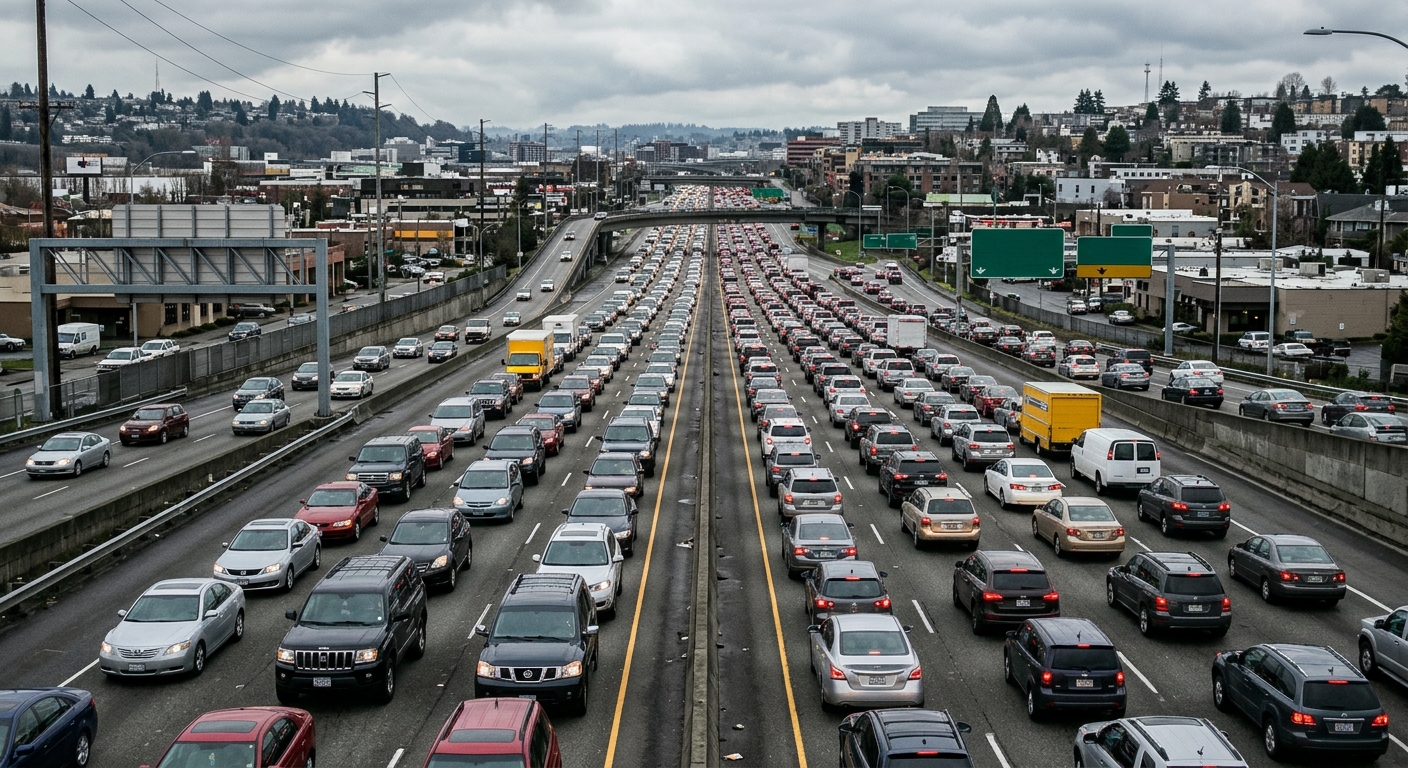
AI-generated illustration; not a photograph of the reported event.
- calendar_today November 24, 2026
The Busiest Week for Holiday Travel Begins Amid Challenges
The holiday travel season in the United States is off to a complicated start, with millions gearing up to visit loved ones despite rising travel costs, heavy traffic, and recent disruptions. Technology failures earlier in November caused the longest nationwide ground stop in 25 years, further unsettling travelers. Weather remains a concern, particularly in spots like San Francisco and along the East Coast.
Travel Anxiety and Uncertainty
Some travelers, like Los Angeles-based journalist Debra Birnbaum, have expressed anxiety about air travel, citing limited explanations from authorities about recent ground stops. Although Birnbaum plans to fly from Los Angeles to New York for Thanksgiving, she admits a preference for driving if it were feasible. However, driving is not without its own set of challenges, including elevated fuel prices and traffic congestion.
Driving During the Holidays: Navigating Traffic and Fuel Costs
The American Automobile Association (AAA) projects that 81.5 million people will travel at least 50 miles from home between the Tuesday before and the Monday after Thanksgiving, with 90% going by car. Transportation analytics firm Inrix says the busiest days on U.S. roads will be Tuesday and Wednesday before Thanksgiving, as well as the Sunday and Monday following the holiday. Major metropolitan areas like New York, Washington, Los Angeles, and Boston may experience more than twice the normal level of traffic congestion.
To avoid the worst delays, Inrix recommends hitting the road early in the morning and steering clear of afternoon and early evening travel. Driving on Thanksgiving Day itself also offers less congestion for those with flexibility.
While gas prices have dropped in the last two months, the national average for regular gasoline remains high at $3.64 per gallon, and diesel prices are significantly higher than last year. AAA notes that this year’s travel period is still among the most expensive for Thanksgiving on record.
Costs vary by location, with some states suspending gas taxes to provide relief. Motorists should use apps to locate the best fuel prices and join loyalty programs or wholesale clubs for additional savings. Other money-saving tips include:
- Using cruise control
- Staying below 70 mph
- Removing heavy items from vehicles
Travel Safety: Preparing for Emergencies
With unpredictable weather and heavy traffic, safety is paramount. The National Safety Council recommends updating emergency vehicle kits every six months. Essential items include:
- Spare tire, wheel wrench, jack, jumper cables, utility tool, flashlight, and duct tape
- First aid items like gauze, bandages, tape, ointment, and gloves
- Drinking water and high-energy, nonperishable foods
- Weather-specific items such as rain ponchos, snow brushes, shovels, warm clothes, and cat litter for traction
- Miscellaneous items like a compass, reflective vest, fire extinguisher, and phone charger
Air Travel: Security and Costs
The Transportation Security Administration (TSA) anticipates screening 17.6 million air passengers nationwide during the Thanksgiving week, with peak days expected on Thanksgiving Sunday. Travelers are advised to arrive at least two hours before domestic flights and three hours before international departures to allow time for check-in and security screening.
Liquids and spreads exceeding 3.4 ounces, such as cranberry sauce or gravy, must be packed in checked luggage, while solid foods like pies or casseroles can be taken as carry-ons.
Airfare has reached a 10-year high, in part due to increased jet fuel costs and broader economic factors. Thanksgiving airfares are up 39% from last year, while Christmas flights have risen by 40% to an average of $466 for a roundtrip ticket, according to booking site Hopper.
Strategies for Saving on Holiday Travel
Experts suggest adjusting travel dates can result in significant savings. Flying on Thanksgiving Day and returning the following Monday or Tuesday, for example, may be much cheaper than typical peak days. Hopper recommends considering alternate airports and airlines, including remaining budget carriers. Be mindful of extra charges from low-cost airlines for baggage and seat selection.
Comparing available flight deals and being flexible with your travel plans remains a crucial strategy for navigating the busy and costly holiday season.
Source: abcnews.com.


