
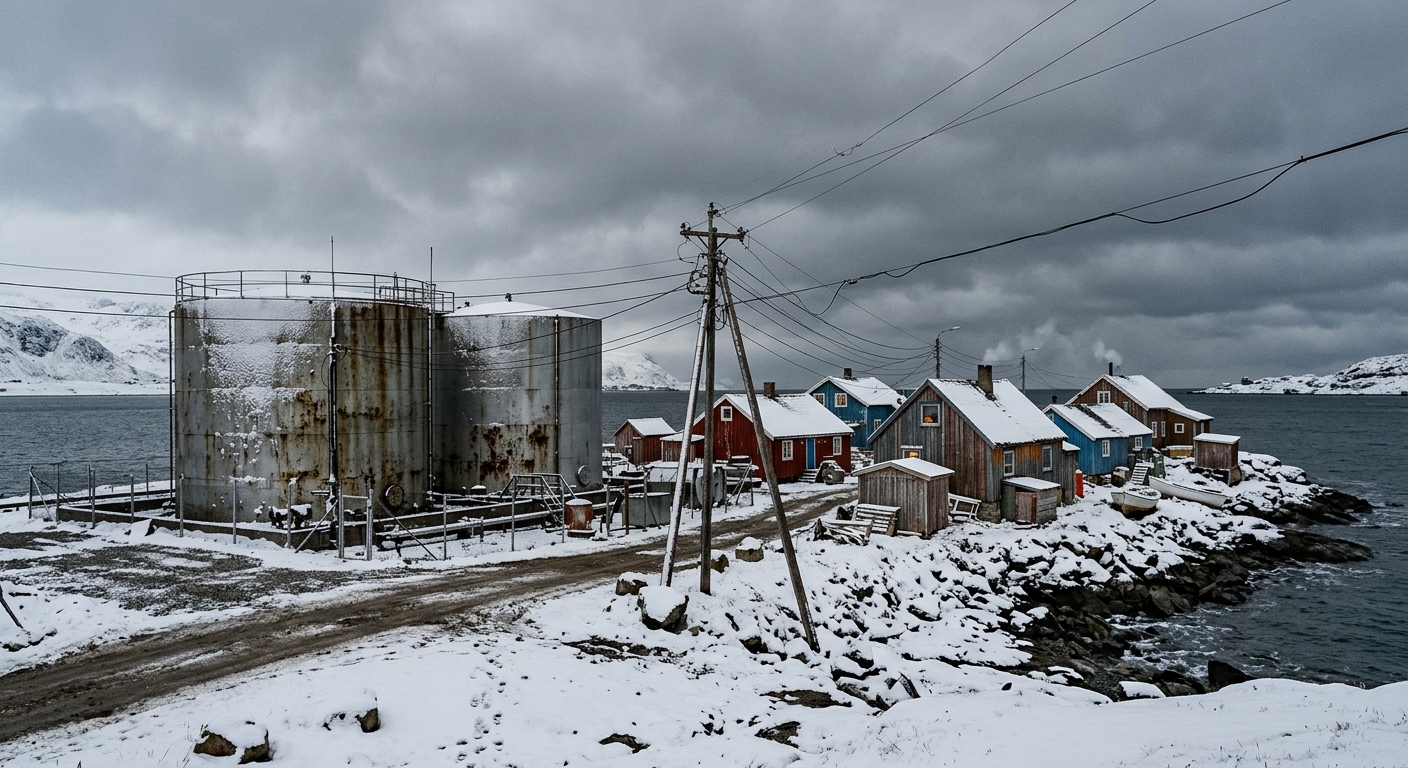
AI-generated illustration; not a photograph of the reported event.
- calendar_today November 12, 2026
Massive Funding Cuts Hit Indigenous Climate Projects
In northwest Alaska, the city of Kotzebue faces immense energy challenges due to its remote location and dependence on diesel, which provides 75 percent of its power. Residents pay a disproportionately high share of their income toward energy, more than three times the national average for low-income households. The community’s struggle to afford diesel, especially amid volatile world markets, underscores a broader crisis now deepened by federal cuts to tribal climate funding.
Kotzebue's Wind Project Halted by Canceled Federal Grant
Chad Nordlum, energy project manager for the Native Village of Kotzebue, celebrated a $20 million Environmental Protection Agency (EPA) grant announced in 2024 as transformative for local energy security. As part of a $150 million infrastructure allocation for Alaska tribes, the funding was intended to cut Kotzebue's diesel reliance nearly in half and empower the community in energy and economic decisions. However, the Trump administration canceled the grant in May 2025, pausing the project indefinitely and leaving the community vulnerable to escalating diesel costs.
Systemic Rollbacks Threaten Indigenous Progress
The grant's cancellation was one of many, as the Department of Government Efficiency (DOGE) withdrew approximately $468 million from Indian Country—half dedicated to environmental and natural resource projects, with another 11 percent aimed at agriculture. These actions largely gutted funding established under the 2022 Inflation Reduction Act, including climate resiliency plans, renewable energy projects, and jobs programs that underpinned tribal sovereignty and economic development.
Two new Brookings Institution reports highlighted how the "One Big Beautiful Bill Act" and DOGE’s funding cuts erased many streams for climate and infrastructure investment. Researchers say that these rollbacks compound a historic pattern of underinvestment in Indigenous communities, violating trust and treaty obligations that require the U.S. government to support tribes in protecting their environments and addressing climate change.
Calls for Policy Change and Sustained Federal Support
Rob Maxim, a Mashpee Wampanoag fellow at Brookings Metro, emphasized the critical need for consistent climate and environmental funding in Indigenous communities, which are hit hardest by climate change and chronic underinvestment. He argued that pandemic-era funding under the Biden administration—a rare surge amounting to over $700 million for climate, energy, and infrastructure—was the exception rather than the rule. Cancelled projects include a $25 million grant to the Hopi Tribe for solar panels and the entire $7 billion Solar for All program.
Maxim maintains that funding for tribes is a federal obligation, rooted not in race or diversity initiatives but in promoting tribal sovereignty and citizens’ well-being. Fellow researcher Glencora Haskins pointed out that recent funding decisions disproportionately targeted grants labeled "tribal," ignoring the deep infrastructure needs those funds were designed to address.
Legislative Recommendations to Protect Tribal Funding
Haskins and Maxim urge Congress to enact laws barring the cancellation of tribal grants and contracts, ensuring that all federal funding for Indigenous nations serves government trust and treaty obligations, regardless of the program’s original purpose. They also call for funding to be delivered directly to tribes, rather than through reimbursement systems.
Communities Pursue Smaller Solutions Amid Uncertainty
Despite setbacks, Kotzebue is pushing forward with smaller-scale solar projects to reduce energy burdens. Nordlum notes that the main goals remain energy security and economic development, enabling the community to invest in sustainability and ensure its future. Advocates hope future policy changes will restore momentum to crucial climate and infrastructure projects for Indigenous communities across the United States.
Source: abcnews.com.


