
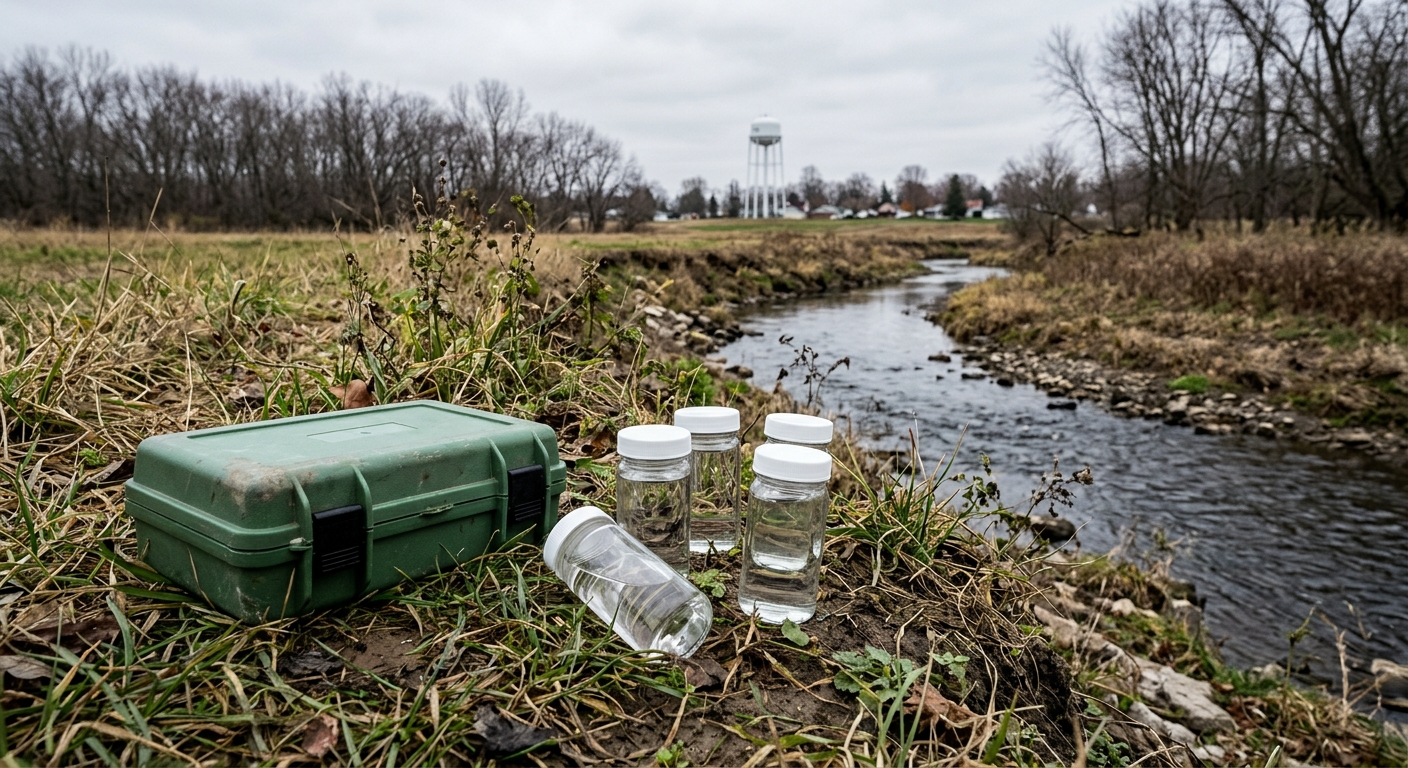
AI-generated illustration; not a photograph of the reported event.
- calendar_today November 28, 2026
EPA Announces Test Results Following Army Detonation of Lead Azide
Initial laboratory analyses indicate that the controlled detonation of five tons of lead azide in southeastern Iowa did not cause any increase in the levels of heavy metals in local water bodies that supply drinking water, according to the U.S. Environmental Protection Agency (EPA).
Army Conducts Detonation of Aging Lead Azide Stockpile
The U.S. Army detonated an unstable stockpile of the hazardous chemical in Middletown, Iowa, after determining it was degrading and could explode uncontrollably as temperatures dropped. The EPA undertook extensive environmental monitoring around the event.
Comprehensive Sampling Before and After the Blast
About 300 EPA staff and affiliated personnel were deployed across the region to collect environmental samples on the day of the detonation. Over 1,500 samples of air, water, soil, and dust were taken before the explosion occurred, with hundreds more collected afterward from locations such as homes, schools, parks, and churches.
The EPA used Xact air monitoring systems to monitor airborne lead for 30 consecutive hours following the blast. In a post on X (formerly Twitter), the agency said ongoing lab analysis will cover more than 3,200 samples from air, soil, dust, and water to further assess the situation.
Drinking Water and Public Health Concerns Addressed
Lead is a toxic heavy metal, particularly hazardous to children and pregnant women. The EPA reported that current lab results show no increased presence of lead in water supplying the region, helping to alleviate immediate concerns of lead contamination or risks to public health from the detonation event.
Community Reaction and Calls for Transparency
Despite the positive initial findings, the Army's decision and communication about the detonation have come under public scrutiny. While residents of Middletown were informed of the plans to destroy the unstable stockpile, many local officials and area residents learned about the imminent detonation only days before it occurred. Criticism has been directed toward the federal government for a perceived lack of transparency and limited public notice.
Continuing Environmental Protection Efforts
The EPA stated it will continue environmental monitoring and update the public as further validated lab results become available. This ongoing work aims to ensure the safety of water supplies and the broader environment for communities in southeastern Iowa affected by the Army's controlled explosion.
Related coverage
Source: abcnews.com.


