
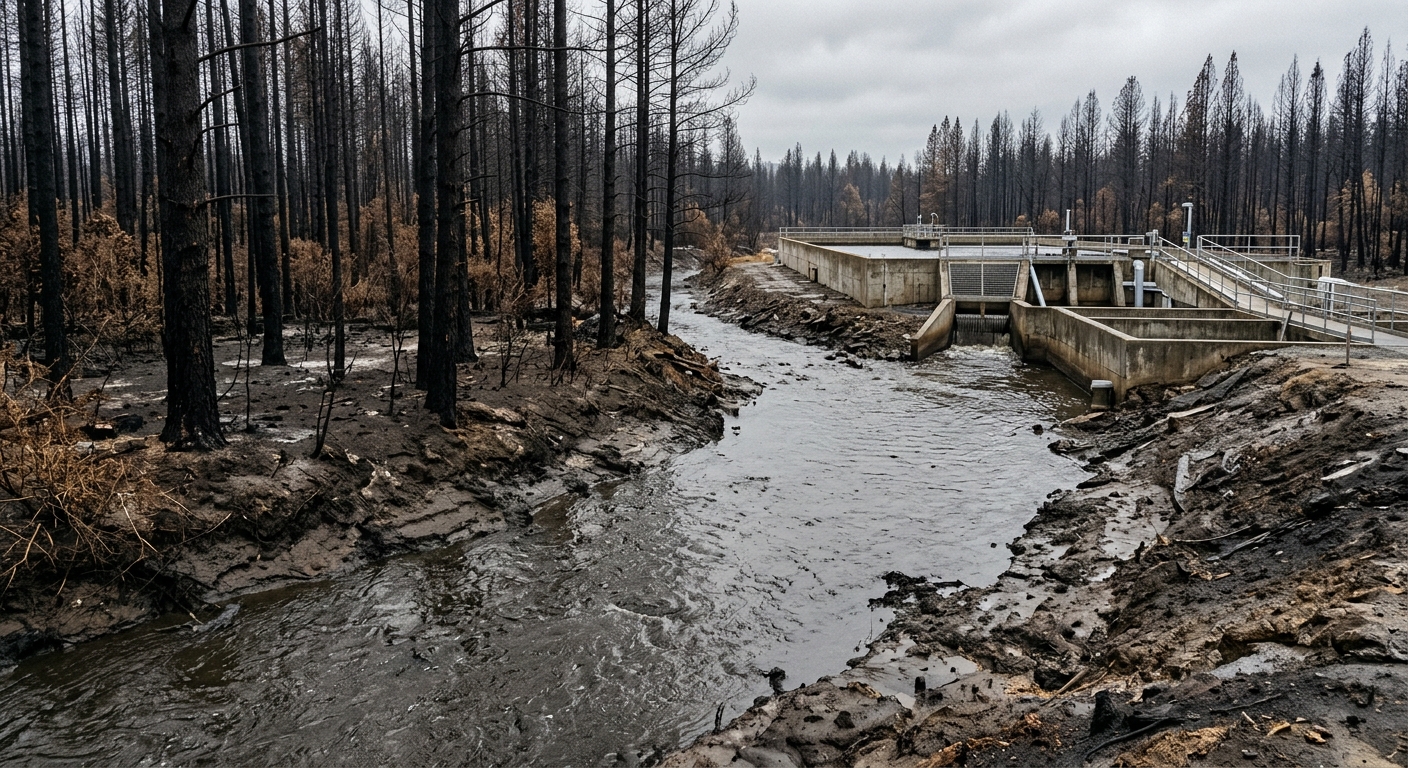
AI-generated illustration; not a photograph of the reported event.
- calendar_today November 13, 2026
Wildfires' Growing Threat to Water Supplies
Wildfires have long been a part of forest ecosystems across the United States, but recent studies highlight a growing concern—their significant and prolonged impact on drinking water supplies. As the effects of climate change and strong El Niño events contribute to bigger and more frequent wildfires, contamination of water sources has become a persistent challenge for communities nationwide. Recent data shows that, as of 2026, 68,179 wildfires have scorched over 9.5 million acres (3.8 million hectares), highlighting the magnitude of this environmental crisis.
How Wildfires Lead to Water Contamination
When wildfires sweep through hillsides and forests, the aftermath leaves behind charred trees and scorched vegetation. Rains in the following months can carry ash and organic matter into the streams and rivers that supply drinking water to towns and cities. This influx of debris creates significant water treatment challenges, often requiring communities to adapt with temporary and sometimes long-term solutions.
According to Amanda Hohner, assistant professor at Montana State University and specialist in wildfires and water quality, increased wildfire severity is making watersheds—the natural systems that capture, filter, and regulate water—more vulnerable to contamination. Studies led by Carli Brucker at the University of Colorado Boulder found that post-wildfire water contamination can persist for up to eight years.
Real-World Impact: Las Vegas, New Mexico
The City of Las Vegas, New Mexico, provides a stark example of these risks. In 2022, the Hermit’s Peak/Calf Canyon wildfire contaminated the Gallinas River, forcing residents to rely on bottled water and emergency shipments from nearby towns. Even four years later, the city continues to collect funds to build a new water treatment plant, with local businesses like the Hillcrest Restaurant facing intermittent closures due to water limitations.
Las Vegas Mayor David Romero emphasized the unpredictability climate change has brought to water reliability: "It’s a scary situation that we’re all going to encounter." The community's experience demonstrates the long-term impact wildfires can have on water supply and the infrastructure needed to ensure drinking water safety.
Widespread Challenges for Water Treatment
The difficulties faced in Las Vegas are shared by numerous other municipalities. Water treatment facilities often rely on streams and rivers with naturally filtered water, but wildfires introduce spikes in heavy metals and dissolved organic matter that plants were not designed to handle. This can lead to periods when facilities must shut down intakes and shift to backup sources, which are not always readily available or unaffected by contamination.
Reservoirs can act as sedimentation basins where particles settle, but according to Kyle Shimabuku of Gonzaga University, nutrients from burned vegetation can foster algal blooms, further compromising water quality and endangering aquatic life. The addition of disinfectants like chlorine after wildfires can also create "disinfection byproducts" linked to health risks such as cancer, necessitating additional treatment steps and possible supply delays.
Case Studies: Emergency Measures and Recovery Efforts
Other communities, such as Glenwood Springs and Fort Collins in Colorado, have also contended with wildfire water quality issues. After a 2020 wildfire near Glenwood Springs, officials secured an $8 million emergency loan to upgrade treatment facilities. Fort Collins was forced to close its river intake and switch to a different reservoir when the Cameron Peak fire contaminated its water source.
Las Vegas, New Mexico, experienced further disruption in 2024 and February 2025 with additional floods and equipment failures exacerbated by wildfire debris. The state and federal governments have since allocated $148 million to rebuild the city’s treatment plant and pursue alternative water sources. Groundbreaking on the new facility is scheduled for November 18, as the city looks to future-proof its water supply against a changing climate.
Looking Ahead: Adapting to Persistent Risks
With nearly two-thirds of U.S. municipalities relying on forested watersheds for their drinking water, the issues exposed by recent wildfires represent a broader challenge. Experts and local leaders stress the urgency of adapting water treatment infrastructure and management practices to confront the realities of more frequent, intense wildfires and the longevity of resulting water contamination.
Source: abcnews.com.


