- calendar_today August 17, 2025
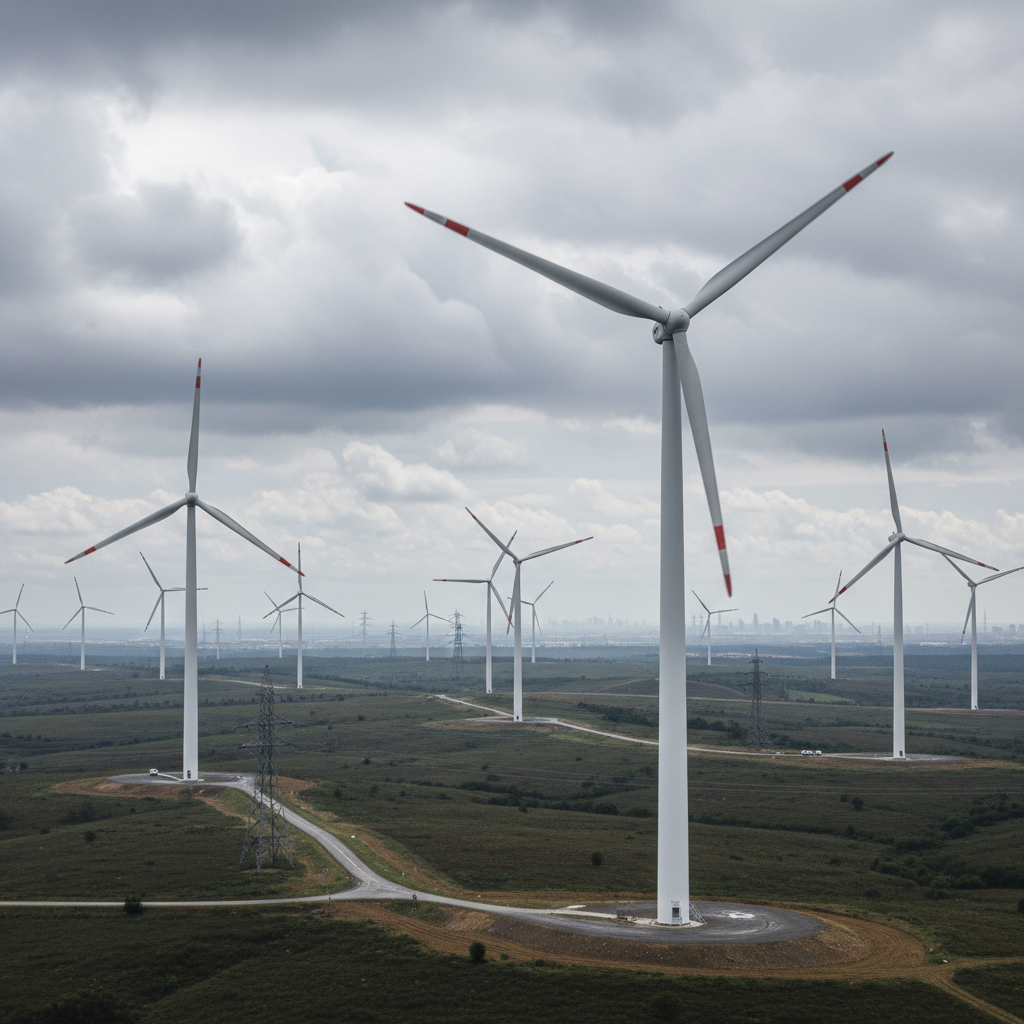
“I mean wind turbines are a con job,” the former U.S. President said at what was billed as a press conference on an EU trade deal. “Wind turbines make the whales … go loco. They go out there and they go nuts. They kill the birds. They kill people.”
The comments were noteworthy not because they were new—wind turbines, like other forms of renewable energy, have been a reliable target of Trump’s ire for decades—but because they provide insight into why. Trump isn’t a unique voice in this area. A history of conspiracy theories about renewables, and wind farms in particular, extends beyond the U.S. and has been building for decades.
Digging into these conspiracies also highlights how closely Trump’s words align with similar rhetoric on both sides of the Atlantic Ocean. Trump is hardly the first political leader to pick on windmills, or renewables more broadly. These kinds of arguments not only echo Trump’s complaints, but the logic often evokes climate denialism itself. Many of the anti-windmill stories Trump has told are pure conspiracy theory, laced with magical thinking and based on almost no evidence.
The Conspiracy Theories About Wind Turbines
Trump uses “windmills” interchangeably with “wind turbines.” For many deniers, this is a useful elision. As an early proponent of conspiracy theories around renewable energy, he once told The Guardian, calling wind farms “windmills” was a useful “industry euphemism.” It not only confused the public about what wind power was, but it also conjured images of old-fashioned pastoral energy to some climate deniers.
Other conspiracy theories are less metaphorical, even if they are more extreme. The example Trump uses of whale trauma is long-running in far-right circles and feeds off the same narrative dynamic. His belief that wind turbines drive whales “loco” has some real-world basis. They can confuse whales’ echolocation, which has been shown to lead to strandings. But attributing the phenomenon to conspiratorial malfeasance has been documented for decades.
Accusations of bird deaths are also long-running. They’ve also been repeatedly debunked and show no evidence that turbines cause more bird deaths than other forms of human energy infrastructure.
Wind turbines were once described by one opponent as the “perfect weapon of mass destruction” for birds and bats, an argument once used to make the case that Obama was a member of the Muslim Brotherhood. Claims that wind turbines can cause blackouts or harm human health also persist.
It was partly in response to these trends that German psychologist Kevin Winter and his colleagues published a paper titled “Wind of change.” The team, which was based at the University of Kent, had previously explored public perceptions of renewable energy and found significant support for conspiracy theories linking the technology to everything from government surveillance to communism.
The research was broad, though early on. For example, it covered Australia, where conspiracy theories about wind turbines have only gained strength in recent years.
Wind of Change: Conspiracy Theories About Wind Turbines Are Strongly Predictive of Opposition to Wind Farms
In that follow-up paper, Winter and his co-authors asked respondents questions such as “I believe wind turbines cause birds and bats to die in great numbers” and asked them to indicate whether they agreed or not. He then measured responses against other attitudinal questions and demographic characteristics to test for correlation.
Wind and his co-authors found that attitudes to wind projects were more strongly associated with a belief in conspiracy theories than other demographic or attitudinal factors. This held even when age, gender, education level, and voting history were considered.
The finding was then repeated in a more recent global study, which again found that those who believed in one conspiracy theory were more likely to endorse others, even those that appeared unrelated. Researchers also determined that political ideology did not necessarily determine an individual’s belief in conspiracies: both left- and right-wing extremists were found to be more likely to endorse the conspiracies.
Taken together, the findings provide evidence for an influential idea within the field of conspiracy theory studies: conspiracy thinking can be “rooted in people’s worldviews,” as the second paper’s authors put it. This applies not just to wind turbines but to the clean energy transition as a whole. For these people, the fight against the energy transition is an article of faith.
Wind farms: the fight of our times?
Wind turbines and other renewable energy facilities have become cultural flashpoints for exactly this reason. They serve as lightning rods for the struggle against clean energy by those who feel threatened, or think they do, by the technology.
Academics and industry have both written on this phenomenon. In the past, an analysis from the IEA described the wind farm as “the latest public battleground in this symbolic fight.” The world of climate denial, like many conspiracy theories, is made up of self-reinforcing claims. Trump is among the highest-profile players in that world, a fact that explains much of his broader appeal and longevity among those who feel aggrieved by the energy transition.
The Root Causes of Anti-Wind Conspiracy Theories
The reasons behind such views and the conspiracy theories that have emerged around them can be traced back to a number of factors, several of which have been documented in research. Climate science first began warning in the 1950s that carbon dioxide emissions could trigger profound and relatively imminent environmental change.
The early movement for renewables in places like the U.S. and the U.K., however, was framed more in terms of reducing the power of fossil fuel companies than as a way to respond to those changes. In The Simpsons, for example, the fossil fuel baron Mr. Burns builds a tower that blocks out the sun, and his nuclear power becomes Springfield’s only remaining energy source.