
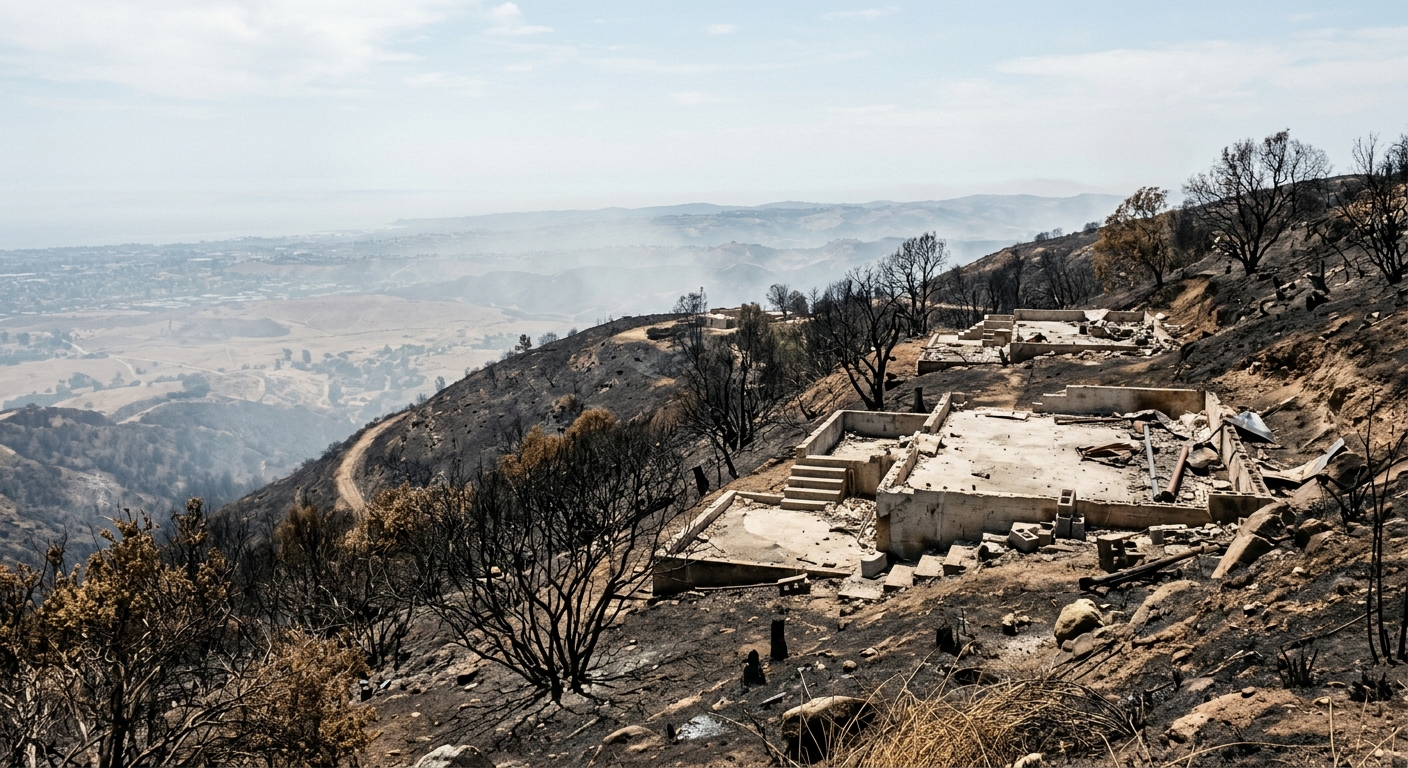
AI-generated illustration; not a photograph of the reported event.
- calendar_today November 21, 2026
Federal Jury Delivers Guilty Verdict in High-Profile Palisades Fire Case
A federal jury in Los Angeles found Jonathan Rinderknecht, 30, guilty on two counts of arson related to the 2025 Palisades Fire, a blaze that claimed 12 lives and destroyed neighborhoods in Los Angeles and Malibu. The verdict comes after a previous trial ended in a mistrial earlier this year.
The Fires and Charges
Prosecutors charged Rinderknecht with destruction of property by means of fire—specifically the "Lachman Fire" that began January 1, 2025—and arson connected to the larger Palisades Fire that reignited on January 7. Both fires burned undetected for several days before the Palisades Fire flared up, rapidly becoming one of the most destructive wildfires in California history. Rinderknecht pleaded not guilty to both federal charges, but was convicted on each count after three days of jury deliberation.
Evidence and Trial Proceedings
Throughout the retrial, the prosecution presented digital forensic evidence, expert testimony, and indicated Rinderknecht's movements in the area where the fire originated. Photographs showed his vehicle parked at the base of a trail leading to the fire’s ignition point, and cellphone tower data further established his presence there that night. Fire detection camera images were used to identify the timing of the blaze, and experts testified to eliminate other possible ignition sources, such as fireworks.
Juror deliberations began with one juror convinced of Rinderknecht’s innocence, but after considering all the evidence, the juror agreed with the guilty verdict. Jurors cited Rinderknecht’s own testimony as a strong indicator of guilt, notably his admission of being alone on the hill with no other people or fireworks present at the time of the blaze.
Defense Arguments and Alternate Explanations
The defense emphasized possible flaws in the government's case. Rinderknecht's attorney, Steve Haney, suggested that the fire scene may have been compromised, noting the site's public accessibility before the Palisades Fire reignited. Haney also presented the theory that fireworks, rather than arson, may have started the blaze, pointing to witnesses—including neighbors and a firefighter—who reported hearing a loud bang or explosion. However, prosecutors countered that among thousands of camera images from that night, none showed fireworks above the hill.
The defense also criticized the prosecution’s fire origin analysis, citing a retired U.S. Forest Service fire investigator who disagreed with government conclusions. Haney pointed to missing cell data records and witnesses who saw teenagers running from the area as reasons for reasonable doubt, urging jurors to disregard Rinderknecht’s character and focus solely on evidence related to the act itself.
Prosecutors’ Focus and Jury’s Decision
During the retrial, prosecutors narrowed their approach, focusing on hard evidence like digital forensics and witness testimony, instead of speculating about alleged motives tied to Rinderknecht’s personal grievances with the wealthy. Testimony from Uber passengers and text messages showed Rinderknecht behaving erratically and angrily in the hours before the blaze. The prosecution also presented video and digital evidence, including Rinderknecht’s calls to 911 and screen recordings in which he appeared to attempt to establish an alibi.
Sentencing and Aftermath
Jonathan Rinderknecht is scheduled for sentencing on March 17, 2027. Each conviction carries a mandatory minimum sentence of five years and a maximum of twenty years in federal prison. Federal prosecutor Bill Essayli praised his team's work, calling the verdict "a testament of the hard work" in assembling the evidence. Defense attorney Haney said they respect the jury’s process and are considering all options regarding an appeal.
The Palisades Fire case concludes a closely watched legal battle over wildfire arson in California, reflecting the complex investigations and prosecutions that follow deadly blazes.
Source: abcnews.com.


