
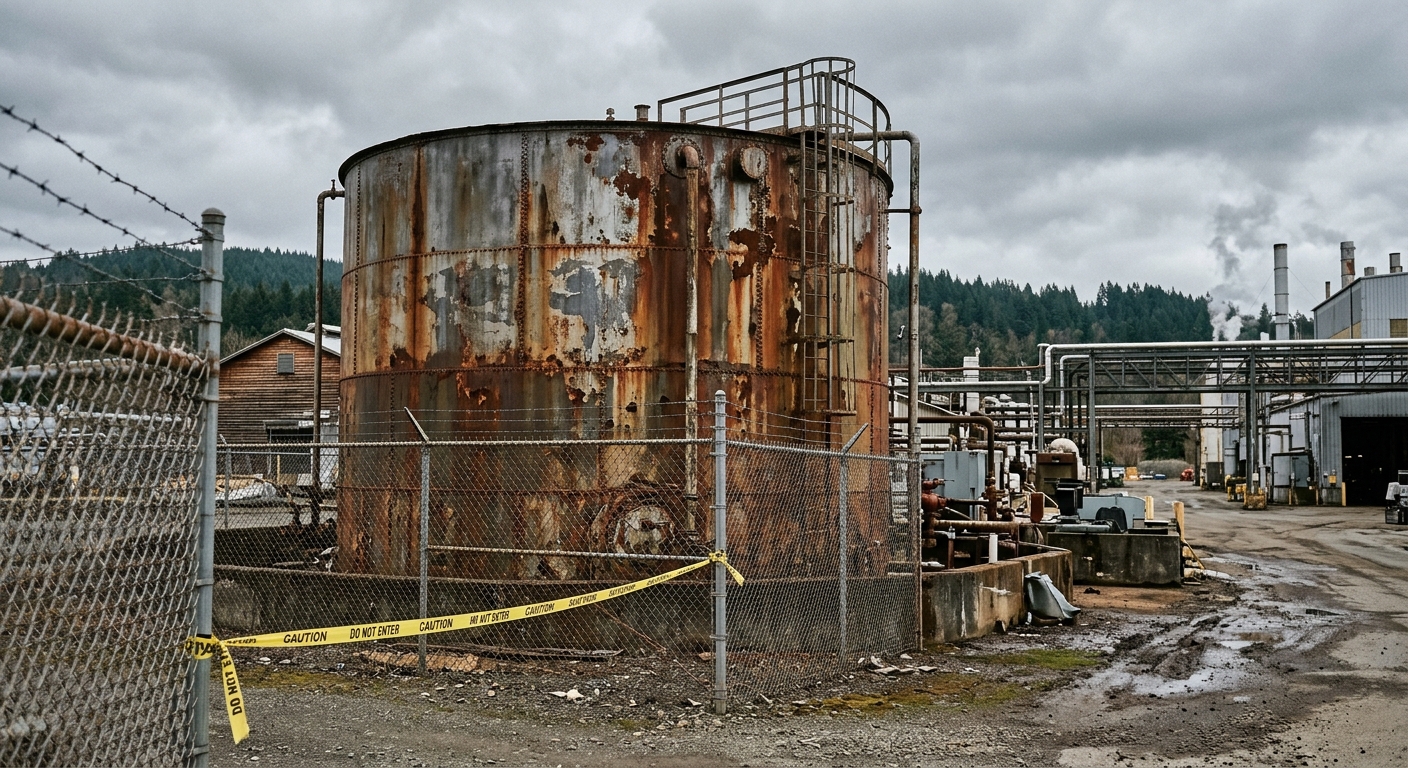
AI-generated illustration; not a photograph of the reported event.
- calendar_today November 21, 2026
Deadly Chemical Tank Rupture at Washington Pulp Mill
Nippon Dynawave Packaging Co., operating a pulp mill in Washington state, faces significant state penalties following a May 26 chemical tank rupture that resulted in 11 worker fatalities and serious injuries to 12 others. State investigators determined that the incident was preceded by a history of egregious and willful safety violations at the facility.
Extensive Record of Safety Violations
According to officials from Washington's Department of Labor and Industries (L&I), Nippon Dynawave failed to inspect or repair more than a dozen other chemical tanks at the site. Compliance manager Dan Pitts emphasized that, "Without repair or replacement, the tank walls were a ticking clock." Since 2018, L&I had investigated over a dozen safety complaints at the plant and issued nearly $7,000 in fines for violations. The state Department of Ecology had also issued 54 environmental violation notices since 2016, with $41,500 collected in fines for serious offenses.
State Fines and Criminal Investigation
Nippon Dynawave now faces more than $10 million in state safety fines, including what officials call the largest employer safety fine in Washington's history. L&I Director Joel Sacks stated that the company’s decision to continue operating the problematic tank contributed directly to the fatalities and announced the case would be referred to prosecutors for potential criminal charges.
Environmental Impact and Violations
The May rupture released over 900,000 gallons (3.4 million liters) of "white liquor," a highly caustic chemical used in paper manufacturing. The spill was forceful enough to blow out building walls and overturn vehicles. Ecology's investigation led to 34 more violations for environmental damage, with $961,000 in penalties sought for harm to air, water, and associated emergency costs. The white liquor spread across the site, entered storm drains, contaminated the wastewater treatment system, and led to chemical discharge into the Columbia River and a nearby ditch, killing fish.
Failures in Emergency Response
State investigators found that Nippon Dynawave's emergency response and planning were inadequate. Staff had not been effectively trained for emergencies, and there was no employer-led incident command for several hours after the rupture. Investigators cited these gaps as contributing factors to the severity of injuries suffered by four workers.
Ongoing Investigations and Legal Actions
A U.S. Chemical Safety Board report mirrored state findings. Inspectors contracted by Nippon in 2025 had previously found the ruptured tank unfit for service due to weakened wall thickness. More than $2.4 million in workers’ compensation claims have been paid for 169 employees since 2015, with many claims related to chemical exposure incidents.
Family members of the victims, including Sheri Lynn King—mother of brothers Tyler and Brad Covington who died in the incident—have filed a wrongful death lawsuit against the company, alleging failed maintenance, training, and safety procedures.
Nippon Dynawave has publicly stated its ongoing cooperation with investigators, facilitating hundreds of regulatory visits. The company reports that a comprehensive forensic analysis into the tank's failure is still underway.
The mill is scheduled to resume operations in December. State officials have stressed that all identified hazards must be addressed before reopening, pledging close ongoing oversight.
Related coverage
Source: abcnews.com.


