- calendar_today October 21, 2026
Why Use a Vacuum Sealer?
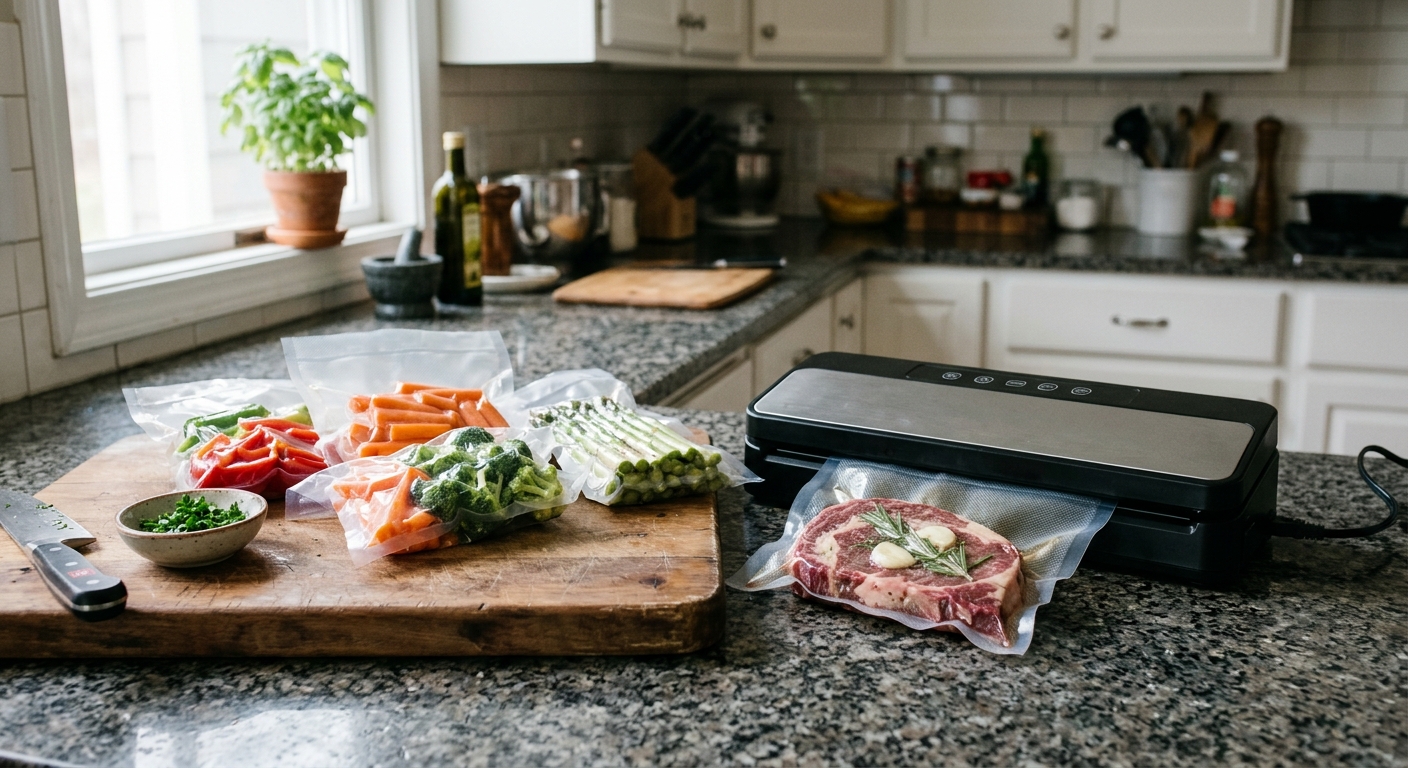
Vacuum sealers are kitchen gadgets designed to extend the shelf life of food, helping to reduce food waste and keep groceries fresher for longer. By removing air before sealing, they slow the spoilage process and help prevent freezer burn. This can make it easier to buy in bulk, prep meals ahead, and save money by preserving valuable meats, produce, and leftovers.
Top Vacuum Sealer Picks
Experts recommend several models that received high ratings from shoppers. Here are standout options:
- Nesco Countertop Sealer: Features three seal settings (dry, moist, and double), two vacuum pressures to protect delicate food, a pulse function, and built-in roll storage with a bag cutter. Compatible with any brand of vacuum sealer bags.
- Anova Compact Sealer: Popular for sous vide cooking, this compact sealer offers single-button operation, pulse, and seal functions for more delicate items, and fits easily in drawers.
- Double-Pump Countertop Sealer: Uses two pumps for swift air removal, offers various food modes and vacuum strengths, has a removable drip tray, and includes built-in roll storage and a bag cutter.
- Fresko Automatic Model: Automatically detects and seals the bag, and pulse mode allows for careful sealing of softer foods.
- Zwilling Handheld Vacuum Sealer: Cordless, rechargeable, and compact, this system comes with reusable containers and bags, and automatically stops when sealing is complete.
Vacuum Sealing Benefits for Food Preservation
The primary vacuum sealing benefit is longer-lasting food quality, especially when freezing. Food experts like Kara Brown and Christine Pittman emphasize that vacuum sealers can double or triple the lifespan of frozen goods compared to non-vacuum sealed foods, due to the reduced air exposure. This helps prevent freezer burn and slows flavor, texture, and color loss.
Sealed bags are more compact than bulky containers, freeing up freezer space and making it easier to organize food. You can efficiently freeze food longer without sacrificing quality—especially important for expensive proteins or bulk produce purchases.
How Do Countertop and Handheld Vacuum Sealers Work?
Countertop vacuum sealers are typically external, edge-style models that remove air from specially textured bags using a pump, then seal the bags with heat. Many include a pulse function, giving greater control for fragile items. Handheld vacuum sealers are smaller, cordless, and portable, often using reusable containers and zip-top bags instead of standard rolls. Both styles help limit air exposure and preserve freshness.
Vacuum sealer bags are specially designed to allow air removal, and you can find models that work with a variety of bag brands. Some even use customizable bag rolls to minimize waste.
Tips for Vacuum Sealing and Food Storage
- Consider appliance size and counter space: Measure before purchasing and think about whether you need a wider sealing strip for bulkier foods.
- Check bag compatibility and cost: Some sealers require brand-specific bags, while others allow flexibility, including cut-to-size rolls.
- Price varies by type: Handheld models are usually less expensive, ideal for occasional use; countertop models are recommended for frequent use and larger quantities.
Vacuum sealing works well for proteins, hard cheeses, and many vegetables—especially when they're blanched and frozen before sealing. It's also useful for pantry staples and extending the shelf life of items like nuts, rice, and coffee beans. Keep in mind, foods prone to squishing (very soft fruits, liquids) or those that release gases (cruciferous vegetables) may require special handling or pre-freezing.
Frequently Asked Questions About Vacuum Sealers
- Who benefits from vacuum sealing? Anyone freezing food, buying groceries in bulk, or meal prepping will benefit. It's also essential for sous vide cooking.
- Can you use vacuum sealers for non-frozen foods? Yes, sealing refrigerated items such as cheese and deli meats can prolong their fridge life. Vacuum sealing doesn’t make food shelf-stable, so perishable items must remain refrigerated.
- What foods can be vacuum sealed? Most proteins, hard cheeses, blanched vegetables, and even soups or stews (after pre-freezing) can be sealed. Some soft and liquid foods are not ideal unless frozen before sealing.
Expert Insight and Selection Process
This roundup draws on independent advice from experts like Kara Brown, a recipe developer, and Christine Pittman, who runs food planning sites TheCookful and CookForTwo. Selection focused on device size, compatibility with food storage bags, price, and performance ratings.
In summary, a quality vacuum sealer is a smart investment for reducing food waste, food preservation, and helping home cooks save money over time.
Source: nbcnews.com.