
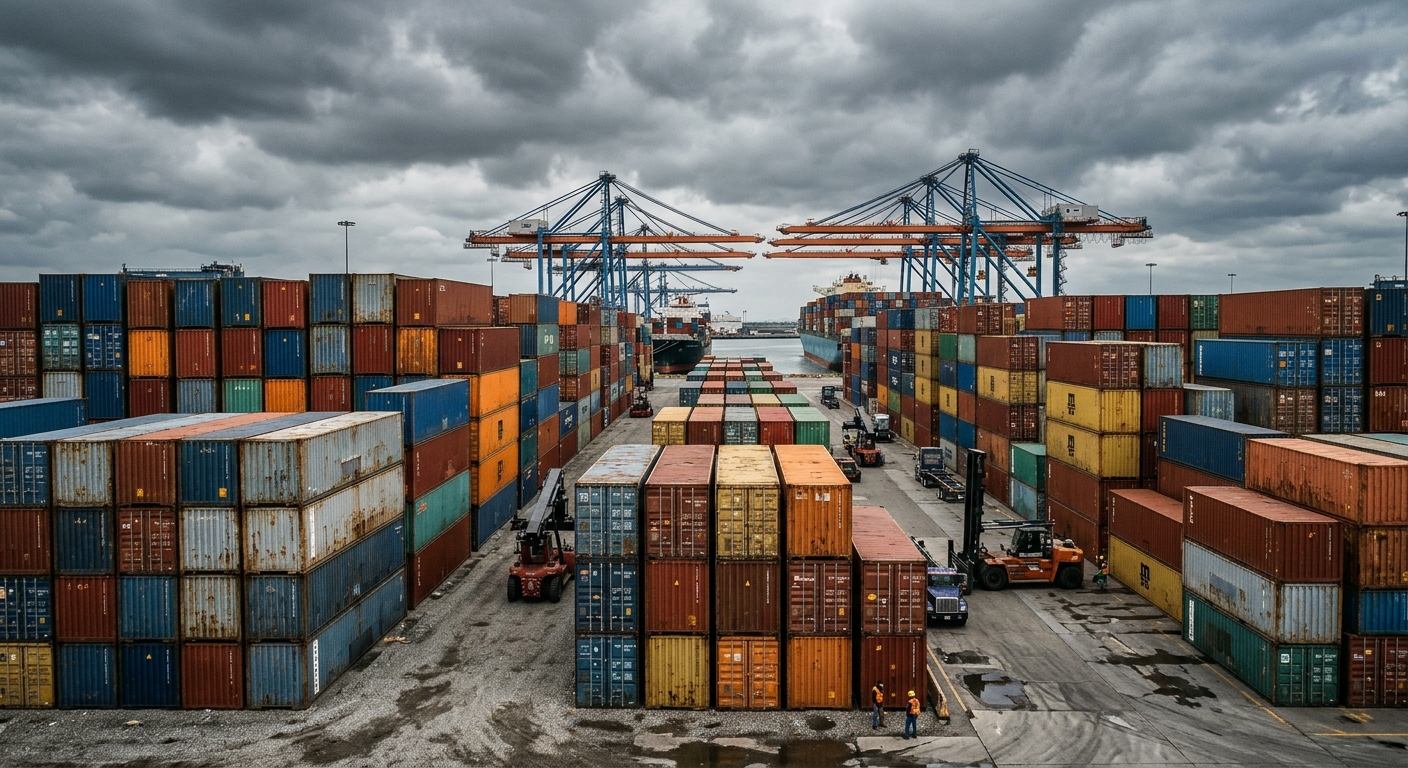
AI-generated illustration; not a photograph of the reported event.
- calendar_today November 25, 2026
New US Tariff Proposals Target China, EU, Brazil, and Other Major Trading Partners
The Trump administration is planning to increase tariffs on a wide range of imported goods, including a significant 20% hike on Chinese products. Other economies set to be affected include the European Union, Brazil, Japan, South Korea, Taiwan, and several additional major trading partners. This move comes as part of the administration's effort to respond to what it calls subsidized overproduction that disadvantages American manufacturing.
Details of the Proposed Tariff Increases
According to a senior administration official, the tariffs are intended both to offset revenue losses after the Supreme Court ruled President Donald Trump could not declare an economic emergency to bypass Congress for broad tariffs, and to push back against what the administration describes as unfair trade practices. Details on the timing and exact implementation remain pending, as the tariffs are still in the proposal phase.
The planned increases include:
- A 20% tariff on Chinese goods, potentially resulting in total tariff rates as high as 45% for some products, stacked on existing import taxes.
- A 20% tariff on certain Vietnamese products, also pending ongoing trade talks.
- Tariff increases ranging from 10% to 18% for goods from other partners, including the 27-member EU, Japan, South Korea, and Taiwan.
- New tariffs targeting Bangladesh, Cambodia, India, Indonesia, Malaysia, Singapore, Switzerland, and Thailand are also in consideration, with Mexico and Norway under review.
- Higher import taxes specifically aimed at Brazil, including increased tariffs on raw and refined sugar as well as a new 10% tariff on aircraft, directly impacting companies such as Embraer.
Legal Foundation and Recent Trade Actions
The administration is invoking Section 301 of the Trade Act of 1974 for these new tariffs. This law grants the US government authority to investigate and respond to foreign practices deemed to violate trade agreements or discriminate against US goods. The tariffs, according to officials, are designed to comply with recent trade deals reached by the Trump White House with dozens of countries after threats of severe tariff hikes.
Importantly, these new tariffs will not be cumulative with those recently imposed under Section 232 of the Trade Expansion Act of 1962, which target products such as automobiles, steel, and aluminum, nor with levies announced in July on trading partners accused of lax enforcement against goods produced by forced labor.
Political and Economic Background
The announcement follows a shift in US congressional power after the most recent midterm elections, where voters attributed economic challenges to the administration's policies, with roughly two-thirds expressing negative sentiments according to The AP Voter Poll. While President Trump has pledged that import taxes will bring back manufacturing jobs and lower the federal deficit, critics point to inflation and voter discontent linked to previous tariffs.
The trade deficit in goods, which recently exceeded $1 trillion annually, remains a central issue for the administration as it seeks to use trade tariffs to support domestic production and address economic imbalances.
US-China Trade Relations and International Response
The new tariffs come as a US-China trade truce, established last year, is set to expire on January 10. Despite the timing, the administration indicated the tariffs would not be a surprise to Beijing and are unlikely to undermine current agreements. President Trump recently met with Chinese leader Xi Jinping in Shenzhen, with plans for further discussions at the upcoming Group of 20 summit in Florida, where topics such as access to rare earth minerals and China’s purchases of US agricultural goods may be revisited.
China’s Ministry of Foreign Affairs reaffirmed its opposition to US tariffs, with spokesperson Guo Jiakun stating that overcapacity concerns are a “false narrative” and calling for resolution through dialogue rather than escalation of trade disputes.
Next Steps and Industry Implications
The official cited by administration sources emphasized that the tariffs are targeted by product and are still under investigation and proposal. Industry sectors potentially affected include aviation, sugar, and various manufacturing segments across the named countries. The timeline for the announcement and implementation of the new tariffs remains unspecified, pending further review by the US Trade Representative’s office.
The Associated Press confirmed the planned tariff announcement in advance, while other outlets such as Bloomberg and The Wall Street Journal reported on the story earlier in the day.
Related coverage
Source: abcnews.com.


